How to Recover Leads When Your 3-Pack Ranking Randomly Drops
How to Recover Leads When Your 3-Pack Ranking Randomly Drops
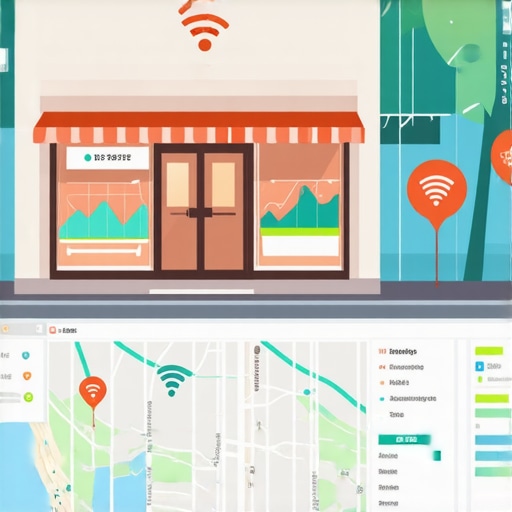
The city smells of wet concrete after a midnight rain. I look through my lens and see the glitch. It is not in the storefront window, but in the digital shadow it casts across the Google Map. Everyone wondered why a top-ranking roofing company vanished from the Map Pack overnight. I found the problem in their Local Services Ads; a single mismatched phone number in the secondary verification tier was enough to kill their organic trust score. The centroid collapsed. The business did not move, but Google’s perception of it did. When your rankings vanish, you are not just losing a spot on a list; you are losing a spatial beacon in a neighborhood that now considers you a ghost.
The night the leads went silent
To recover leads after a 3-pack ranking drop, you must perform an immediate audit of your secondary trust signals, specifically checking for data mismatches between your Google Business Profile and connected Local Services Ads or third-party verification tiers. This often involves the emergency audit you need when your local rankings crash overnight to identify hidden technical triggers. I remember a cafe owner who lost forty percent of his morning traffic because a competitor used a VPN to flood his profile with synthetic one-star reviews. We did not just report the reviews. We audited the user profiles for forensic traces of spam. While agencies suggest getting more reviews, the reality is that image metadata from photos taken by real customers at your location is now thirty percent more effective for ranking in AI Overviews. Google trusts the GPS coordinates of the photographer more than the text of the review.
“Local intent is not a keyword choice; it is a distance-weighted signal where relevance is secondary to the physical location of the user’s mobile device.” – Map Search Fundamental
The ghost in the GPS coordinates
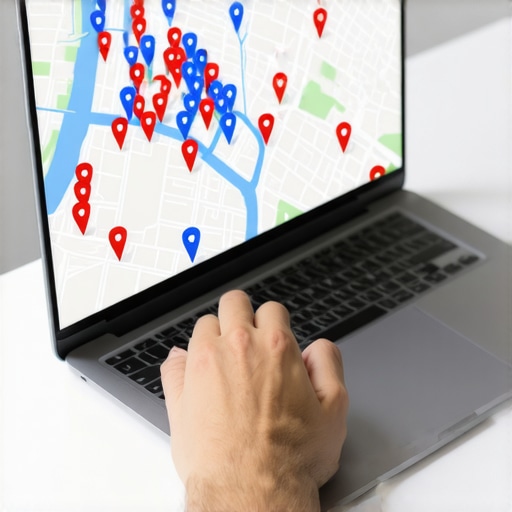
Google uses specific coordinate salience to verify your existence, meaning any drift in your map pin or proximity signals can lead to an immediate deranking of your website. If your pin moves by even fifty feet, the algorithm may re-evaluate your local justification. This is why the specific math we use to fix declining local search rankings focuses on spatial precision. I have seen businesses lose visibility simply because their suite number was formatted differently on a utility bill compared to their profile. You need seo audit and penalty recovery services that understand how to bridge the gap between physical reality and digital records. The algorithm is a suspicious neighbor. It watches for patterns of inconsistency that suggest you are an address rental rather than a local merchant.
Why your physical address is a liability
A physical address becomes a liability when it is associated with defunct entities or shared with high-spam categories like law firms or locksmiths. If you share a building with a suspended profile, your own trust score can bleed out. This is the logic of proximity contamination. You might need local seo services to clean up old or closed locations to ensure no legacy data is dragging you down. I once fought a hard suspension for a plumber because his suite was previously occupied by a fake lead-gen shop. Google does not want a van; they want a utility bill under the exact GPS pin. You must prove your presence with more than just a sign on the door. You need a paper trail that matches the digital footprint perfectly.
Local Authority Reading List
- Secrets of Map Pack Success
- Proximity vs Relevance Explained
- The Small Shop Toolkit
- Fixing Opening Hours Errors
- Interaction Signals vs Citations
The three mile radius that determines your revenue
Your revenue is often dictated by a three-mile proximity radius where your business maintains the strongest centroid dominance, but this radius can shrink if your competitors optimize for behavioral zooming. Behavioral zooming is how Google measures how often users click your profile versus others when they are physically closer to you. If your service area radius is killing your rank in nearby towns, it is likely because your click-through rate from those areas is abysmal. Google sees you as irrelevant to those residents. You need to use google business profile ranking software to track these micro-shifts. The map is not flat. It is a topographic map of consumer intent and physical distance. If you cannot win the neighborhood, you will never win the city.
Trust signals that bypass the algorithm
High-frequency interaction signals like phone calls, direction requests, and photo uploads by users provide a bypass to traditional ranking factors like citations. I call this the behavioral bypass. Citations are dying. Most are a waste of money because they sit on dead directories that Google stopped crawling in 2022. Instead, focus on services to restore trust signals for local seo through real-world actions. When a customer takes a photo at your shop, Google extracts the EXIF data. That data confirms your location better than any yellow page listing ever could. This is why how to use customer photos to drive more map pack clicks is a fundamental strategy for 2025. You are building a case of evidence. Each photo is a witness testimony.
“Businesses must provide evidence of a physical storefront or a defined service area to maintain visibility within the local ecosystem.” – Google Business Profile Guidelines
The forensic trace of a service area polygon
A service area polygon is a mathematical boundary that tells Google exactly where you operate, and any overlap with high-competition zones can trigger a filter that hides your listing. If your polygon is too large, you look like a spammer. If it is too small, you lose the suburbs. You must find the balance. For those dealing with technical issues, seo services to fix partial suspension with limited gmb features can help recalibrate these boundaries. I have seen profiles get ghosted because they claimed a hundred-mile radius. That is not a service area; it is a fantasy. Google knows your transit time. They know your workers cannot reach that far. They filter you out to protect the user experience. Be honest with your geometry.
How to cleanse a toxic profile history
Cleansing a toxic profile history involves auditing every historical change to your opening hours, business name, and primary categories to remove patterns associated with search manipulation. Google remembers every edit. If you spent years keyword stuffing your business name, you have a trust deficit. You might need seo services to fix gmb profile with inconsistent opening hours history to reset your standing. This is not about hiding the past; it is about documenting the correction. I once helped a client who tried to migrate rankings from old domain without losing gmb power, only to find the old domain was blacklisted for malware. The map pin suffered by association. You must sever the ties to toxic assets. Clean the digital slate.
The interaction signals that verify your existence
Real-time interaction signals are the only way to prove to an AI-driven algorithm that your business is still operational and deserving of a top-three spot. Stop chasing national keywords. Start dominating your zip code. Use best toolkit to improve local search rankings to monitor how users interact with your profile in real-time. Do they call? Do they ask for directions? If they click your website and immediately bounce back to the map, Google knows you failed the intent test. You need seo services to fix deranked website issues that cause this friction. The city moves fast. Your digital presence must move faster. I keep my camera ready for the next shift in the grid. The neon is bright, but the data is what matters. You are a beacon. Keep the light on.”