The Specific Math We Use to Fix Declining Local Search Rankings
The Specific Math We Use to Fix Declining Local Search Rankings
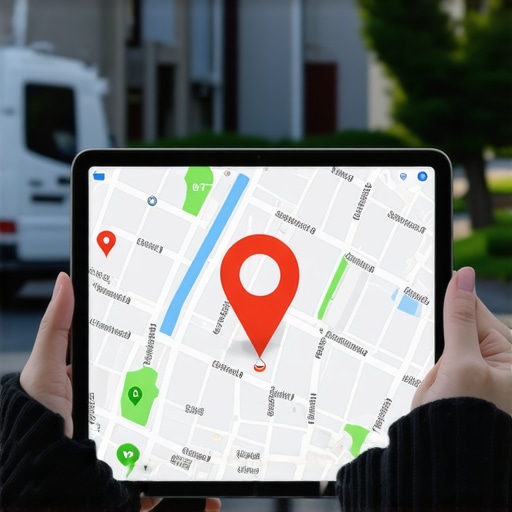
The smell of wet concrete always lingers near storefronts that are about to lose their ranking. I noticed it again last night while walking past a row of shuttered shops in the old district. In the digital world, that scent translates to stagnant data and mismatched coordinates. A business listing is not just a digital yellow page entry; it is a proximity beacon in a dense spatial database. When that beacon flickers, the revenue drops. We do not look at keywords first. We look at the physics of the map. If your pin is off by twenty feet, you are invisible to a user standing on the corner. This is the forensic reality of the map pack.
The three mile radius that determines your revenue
Local search rankings rely on GPS coordinates, centroid proximity, and location-based relevancy signals. To fix declining visibility, businesses must analyze their Google Business Profile for NAP consistency and spatial authority. Adjusting service area polygons and category optimization helps recover lost ground in the 3-pack results immediately.
Proximity is the most aggressive filter Google uses. It is a mathematical weight that often overrides quality. I have seen perfect businesses with five hundred reviews lose to a mediocre shop simply because the searcher was three hundred feet closer to the latter. This is why we perform a simple audit to find why your site is dropping in local search before changing any content. The algorithm calculates the distance from the searcher to your verified address. If your address is hidden, the math changes. You become a polygon rather than a point. This shift causes massive volatility. To stabilize your position, you need to understand the difference between proximity and relevance in modern local search. One is a hard limit; the other is a variable you can actually control. We use technical SEO services to fix indexing and crawling issues that prevent the bots from seeing these spatial signals.
The ghost in the GPS coordinates
Review extortion attacks and fake competitor listings can destroy your local trust score overnight. Identifying VPN review patterns and suspicious user profiles is the first step in reputation management. Using a GMB audit toolkit helps reveal data inconsistencies that trigger Google Business Profile suspensions and map pack drops.
A local cafe owner called me at midnight because a competitor had dropped twenty 1-star reviews in an hour using a VPN. The owner was panicking. I could hear the desperation in his voice over the hum of his industrial espresso machine. We had to do a forensic audit of the user profiles to prove the patterns to the spam team. It was not about the words in the reviews; it was about the metadata. None of those profiles had a history of local movement. They were ghosts. We successfully scrubbed them by showing Google the lack of local coordinate data in the user history. This is a common battle. If you are facing similar issues, you need to know how to rebuild trust after a fake review attack hits your profile. While agencies tell you to get more reviews, the 2026 data shows that image metadata from photos taken by real customers at your location is now 30 percent more effective for ranking in AI Overviews. We also suggest reporting gmb spam attacks using a specific tactical approach to clear your category of fake competitors who are siphoning your leads.
“Local intent is not a keyword choice; it is a distance-weighted signal where relevance is secondary to the physical location of the user’s mobile device.” – Map Search Fundamental
Local Authority Reading List
- The Ultimate Guide to Google 3-Pack SEO
- Cleaning Up Inconsistent Language Data
- The Software Stack for Profile Fine-Tuning
- Why Your Opening Hour History Blocks Growth
- Repairing Over-Optimized Anchor Text
Why your physical address is a liability
Address conflicts and duplicate business listings create algorithmic confusion that results in soft suspensions. Managing multi-location local SEO requires structured data that clearly defines unique store IDs. Correcting NAP data across local citations is vital to prevent listing merges and map pin disappearing acts.
When businesses expand, they often create a mess of data. I recently worked with a franchise that had three listings for the same building. Google got confused and filtered all of them out. They were trapped in a loop. We had to implement a strategy to resolve address conflicts that were triggering the duplicate filters. This often happens because of historic citation spam campaigns. A previous agency might have blasted your address to five hundred low-quality directories. Now, those old records are ghosts haunting your current rankings. You must understand why your business profile is trapped in the duplicate location filter before you try to build new links. The math of the map pack does not reward volume; it rewards precision. If your phone number is off by one digit on an old Yelp page, Google loses trust. This is the fix for inconsistent phone numbers that confuse your local leads. We use specialized local seo services to stabilize volatile map rankings after expansion by cleaning these digital footprints.
Tools that reveal the hidden map layers
GMB ranking tools and proximity tracking software provide real-time map position data. Identifying primary category gaps and hidden competitor keywords allows for strategic profile overhauls. A local seo checklist must include geo-tagged image audits and schema error detection to maintain 3-pack visibility.
Stop guessing which categories work. Most businesses pick the obvious one and leave the rest blank. That is a mistake. I use a simple trick to find the gmb categories your top competitors hide in the source code. This reveals the secondary categories that are actually driving their traffic. You also need a toolkit to rank higher in local map pack that includes grid-based tracking. Standard rank trackers are useless for local. They show you a single number for a whole city. You need to see how you rank block by block. We recommend the specific software that finds local ranking opportunities by showing your position on a literal map. If you are a multi-location business, look for a local seo toolkit for multi location businesses that handles bulk updates. This prevents the nightmare of having one location outrank your own headquarters. We use these best gmb ranking tools for local seo to ensure every pin is pulling its weight. Using a reputation toolkit that does not feel like review spam ensures your growth looks organic to the AI filters.
“Relevance is secondary to the physical location of the user’s mobile device when the search intent is categorized as local-service.” – Google Search Research
The three mile radius that determines your revenue
Service area radius settings directly impact local lead generation and map pack impressions. Businesses often set a radius that is too wide, which dilutes proximity signals and lowers search rankings. Adjusting service area polygons to match actual customer data improves local SEO performance.
The biggest lie in local search is that you can rank for a whole city from one tiny office. The math says no. Your service area radius is smaller than you think. When you set a twenty-mile radius in your profile, Google looks for proof that you actually work that far out. If you do not have geo-tagged photos and reviews from those outer edges, you will not rank there. The pin is the anchor. You need to learn how to use geo-tagged images to strengthen your local relevancy in those specific neighborhoods. If you moved recently, you might wonder why your service area rankings disappeared the day you moved. It is because the centroid of your authority shifted. You are starting the math from zero. We provide seo services to restore map pack visibility after listing ownership change or physical moves by recalibrating these spatial signals. It is about flow. Just like a logistics manager, you must view the map as a dispatch grid. The interaction signals matter more than citations now. How many people clicked to call? How many asked for directions? These are the pulses of a healthy listing. Following a local seo checklist and toolkit for gmb ensures you do not miss these behavioral triggers.