
How to Clean Up Messy Directory Data Without Losing Your Mind
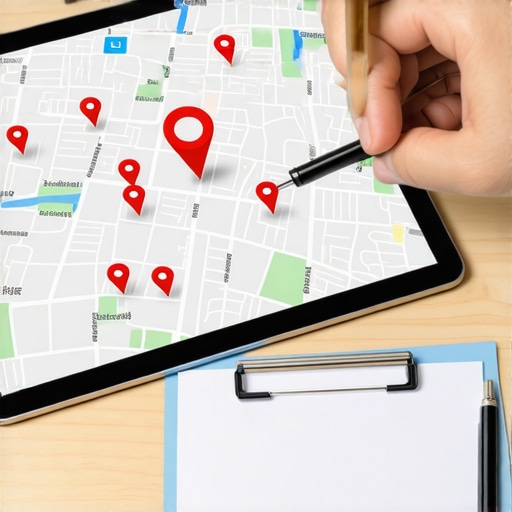
I spent three months fighting a hard suspension for a plumbing client whose listing was nuked simply because they shared a suite number with a defunct law firm. Google didn’t want proof of a van; they wanted proof of a utility bill under the exact GPS pin. I remember standing in the rain outside that office, smelling the wet concrete and diesel exhaust, taking a photo of the physical directory just to prove the lawyer was long gone. This is the reality of the hyper-local layer. It is not about beautiful websites or clever copy. It is about the cold, mathematical friction between your digital data and the physical dirt where your business sits. If your directory data is a mess, the algorithm sees a liar, not a merchant. The map pin is a proximity beacon, and any static in that signal is enough to ghost you from the search results.
The ghost in the GPS coordinates
Directory data cleanup requires a systematic audit of your business Name, Address, and Phone number (NAP) across primary data aggregators to eliminate duplicate listings and conflicting information. By using a local SEO toolkit to find hidden profiles, you can resolve the address conflicts that trigger Google filters and suppress your visibility. The algorithm operates on a centroid theory, calculating the exact distance between the user’s mobile device and your verified GPS coordinates. When you have messy data, you are essentially telling the database that you exist in two places at once. This creates a spatial paradox. I have seen businesses vanish from the map because an old Yelp listing from 2012 still pointed to an old warehouse three blocks away. This small error diluted the proximity signal enough that a competitor with half the reviews took the top spot. You must treat your location data as a forensic trace. Every scrape from an old Yellow Pages database or a defunct local blog adds weight to the wrong side of the scale. To fix this, you need the checklist we use to audit every new local business profile to ensure no legacy data is haunting your current rank.
Why your physical address is a liability
Physical addresses become liabilities when shared with other businesses or when they have a history of spammy activity that triggers Google’s duplicate location filter. Cleaning this mess requires a strategic profile overhaul that involves consolidating multiple listings without losing your hard-earned review history or local authority. The database is skeptical of every suite number and every office park. In the world of high-stakes maps, your neighbors matter as much as you do. If you move into a suite that was previously occupied by a banned locksmith, your trust score starts at zero. You are guilty by spatial association. This is why it is vital to how to resolve address conflicts that trigger Googles duplicate filters before you spend a dime on ads. I once worked with a legal firm that was trapped in page two limbo because they used a virtual office address that was being used by fifty other ‘shell’ companies. Google’s ‘Vicinity’ update is designed to filter out this noise. It looks for the signal of a real, breathing business. If your data is messy, you are just noise.
“Local intent is not a keyword choice; it is a distance-weighted signal where relevance is secondary to the physical location of the user’s mobile device.” – Map Search Fundamental
Local Authority Reading List
- The GMB Toolkit That Actually Moves the Needle
- Recovering Your Listing After a Shake-Up
- The Precise Way to Update Your Opening Hours
- Why Most Local Citations Are a Waste of Money
The three mile radius that determines your revenue
A three mile radius represents the primary battleground for local businesses where proximity signals are most concentrated and competitor density is highest. Dominating this area requires fixing inconsistent phone numbers and clearing out competitor spam that hides your real-time map position from potential leads. The math of the map pack is unforgiving. As you move away from the centroid of a search, your relevance score must increase exponentially to keep you in the top three. If your directory data is inconsistent, your relevance score takes a massive hit. You are essentially shrinking your own radius. Most agencies will tell you to buy more citations, but why most local citations are a waste of money for map pack growth is simple: Google already knows where you are, it just doesn’t trust you. It is better to have ten perfectly clean listings on tier-one sites than five hundred messy ones on dead directories. Behavioral zooming shows that users rarely click ‘view all’ on maps. They want the first three. If your data causes a mismatch between your website and your business profile, you are effectively invisible to the person standing two miles away.
How to audit your business profile like a forensic investigator
A forensic audit of your business profile involves checking every layer of data from your primary category to the hidden JSON-LD schema on your website to find technical errors ghosting your storefront. This process uncovers why your map pin disappeared while your website rankings stayed high. You need to look at the ‘interaction signals’ that matter more than simple citations. Are customers taking photos at your location? Are they searching for your brand name specifically? This is what I call behavioral math. If you find your why your map pin disappeared while your website rankings stayed high, the culprit is almost always a data conflict in the backend. Google trusts the website, but it does not trust the profile. You must bridge that gap. Start by using specialized tools to find the right GMB categories and keywords that match your actual services. If you are listed as a ‘Plumber’ on your profile but your website focuses on ‘Emergency Drain Cleaning,’ the mismatch creates a filter trigger. You must normalize everything.
The high cost of keyword stuffed business names
Keyword stuffing your business name leads to hard suspensions and ranking drops because it violates the terms of service designed to maintain map integrity. Normalizing your rankings after a name edit requires cleaning up your digital footprint after a business rebrand to restore original authority. I have seen countless businesses try to game the system by adding ‘Best City Plumber’ to their legal name. It works for a week, then the listing is ghosted. Fighting this requires a delicate touch. If you have been penalized, you need seo services to normalize rankings after keyword stuffed business name edit to show Google you are playing by the rules. Proximity is a distance-weighted signal, and trying to cheat that signal with text strings is a amateur move. The algorithm is smarter than a few extra words. It looks at your legal incorporation, your utility bills, and your signage. If those don’t match your profile, you are out. It is much better to why your business name shouldnt include your city for better rankings and focus on building real relevance through customer interactions.
“Relevance is secondary to the physical location of the user’s mobile device, but trust is the bridge that allows proximity to result in a ranking.” – Map Search Fundamental
Why most local citations are a waste of money
Most local citations are useless because they live on low-authority directories that Google ignores or filters out as spam. Effective data cleanup focuses on high-impact sites and fixing the interaction signals that actually drive map pack clicks and phone calls from your profile. The old way of SEO was about volume. The new way is about precision. If you are struggling with fixing low GMB rankings without hiring a massive agency, stop buying citation packages. Instead, look for the only tools you actually need to keep your business profile healthy. These tools focus on data accuracy on the core aggregators. One correct listing on a site that Google actually crawls is worth more than a thousand on sites that exist only for link building. Data decay is real. Every month, information on the web degrades as scrapers pull from other scrapers. You have to be the one who maintains the source of truth. If you let it slide, your rank will slide with it.
Recovering your rank after a sudden drop
Recovering from a sudden ranking drop requires an emergency audit to identify technical errors or competitor sabotage that may have triggered a local search filter. You must check your profile health and review history to rebuild trust with the algorithm and restore your visibility. When the rank drops, the clock starts. You need to know the emergency audit you need when your local rankings crash overnight. Often, it is a simple fix, like an inconsistent phone number or a mixed-language listing that confused the bots. Sometimes, it is more sinister, like a competitor reporting your location as ‘closed.’ This is why why competitor spam is tanking your map rank and how to stop it is a vital skill for any local business owner. You cannot afford to be passive. The map is a living, breathing database, and if you are not actively defending your data, you are losing. Clean it up, keep it clean, and the algorithm will reward you with the leads you deserve.