Recovering Your Business Listing After a Local Algorithm Shake-up
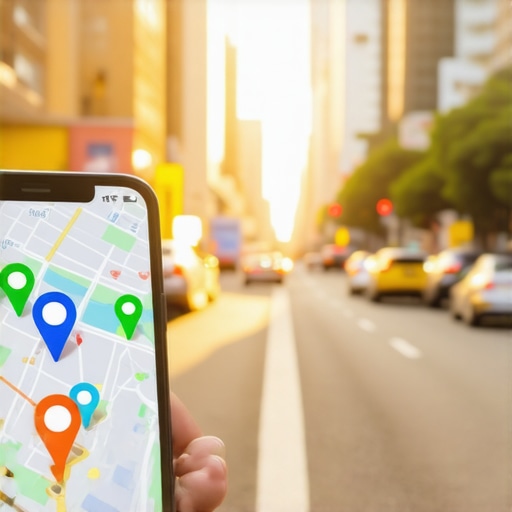
The air in the office smells like wet concrete and ozone today. It reminds me of the morning after a storm, when the world looks familiar but nothing is where it used to be. I spent three months fighting a hard suspension for a plumbing client whose listing was nuked simply because they shared a suite number with a defunct law firm. Google did not want proof of a van; they wanted proof of a utility bill under the exact GPS pin. That experience taught me that the map is a fragile grid. When a core update hits, the grid fractures. I see these fractures through a lens that ignores the marketing fluff. I look for the pixelated errors, the coordinate drifts, and the forensic traces of service area polygons that no longer align with the master database. Your ranking did not just drop; the proximity beacon that connects your business to the local customer has been dimmed by a algorithmic shift.
The ghost in the GPS coordinates
Recovering local rankings after an update requires a deep audit of GPS coordinate salience, NAP consistency, and Local Business Schema. You must identify if a Map Pack drop is due to a Google Business Profile suspension, proximity filter changes, or competitor spam attacks impacting your Local SEO visibility. The first step is acknowledging that Google views your storefront as a set of mathematical coordinates. If those coordinates fluctuate even by a fraction, the trust score resets. I often see businesses lose everything because their website schema uses a different longitude than their dashboard. It is a technical mismatch that creates a phantom entity. You need identifying the technical errors ghosting your local storefront to ensure the bots see one unified truth. The algorithm does not care about your mission statement; it cares about the certainty of your physical existence.
Why your physical address is a liability
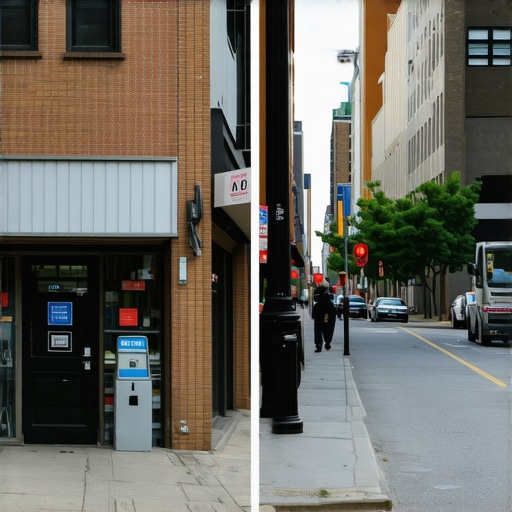
Physical address verification is the primary trust signal for the Google Map Pack and Local Services Ads verification. If your storefront address is associated with virtual offices, co-working spaces, or residential zones, you risk a hard suspension or being filtered out by the Vicinity update logic. This is where the street photography mind comes in handy. You have to look at the storefront from the perspective of a Google car. Is there a sign? Is the door clearly marked? Many companies are currently recovering visibility after hiding your home based business address because the update penalized home businesses that claimed a wider radius than they could physically serve. Your address is a liability if it cannot be verified by a third party utility bill or a physical inspection of the suite number.
“Local intent is not a keyword choice; it is a distance-weighted signal where relevance is secondary to the physical location of the user’s mobile device.” – Map Search Fundamental
The three mile radius that determines your revenue
Local search proximity is now weighted heavily toward the user location, making a three mile radius the primary conversion zone for most businesses. To rank beyond this, you must build topical authority through hyper-local content, customer interaction signals, and geo-tagged image metadata that proves your service area reach. The math is brutal. If you are four miles away and your competitor is two, you need ten times the review velocity to bridge that gap. I have watched plumbers lose leads because they moved their office across the street. We had to use the radius mistake that keeps your service area pages off the map as a guide to recalibrate their digital fence. If your service area rankings disappeared the day you moved, it is because your old centroid was the anchor for your authority.
Cleaning up the mess of an agency failure
Over-optimized anchor text and keyword stuffed business names are the fastest ways to trigger a local search penalty during an algorithm shake-up. You must implement gmb profile reinstatement services and seo services to fix schema errors to remove spam filters and restore your map ranking power. Agencies often sell citation blasts to dead directories that do more harm than good. I see the traces of these failed campaigns everywhere. They look like digital litter. You need to focus on how to clean up a messy business profile history after an agency fail to purge the bad data. If your name includes the city and the keyword but is not on your legal documents, you are a sitting duck for the next update.
Local Authority Reading List
- The Recovery Plan for Local Penalties
- First Steps After a Profile Ban
- Decoding Soft and Hard Suspensions
- Tools for 3-Pack Dominance
- Interaction Signals vs Citations
The forensic trace of a service area polygon
Service area businesses must define geographic polygons in their Google Business Profile that reflect actual service zones rather than aspirational market reach. Incorrect radius settings lead to ghosting in search results, requiring seo services to recover impressions and re-verify location data through unstructured citations and real-time interaction proof. The algorithm is looking for a dispatch logic. It sees where your trucks go. If your workers never enter a specific zip code but you claim it, the system flags the inconsistency. We use why your service area business disappears the moment you cross city lines to explain this invisible wall. You cannot just draw a circle on a map and expect the algorithm to believe you. You need customer reviews from that specific neighborhood to prove your presence.
Why most pest control leads dry up after you leave the job site
Customer behavioral signals like directions requests, click-to-call events, and mobile check-ins create a real-time heat map of business relevance. When these interaction signals drop, your map pin will slide to page two, necessitating a local seo toolkit to track rankings and optimize profile features for maximum local clicks. I analyzed a case where a pest control company lost its rank because its technicians were not using the company app at the job sites. No GPS pings from the workers meant no proof of service. We had to revisit why most pest control leads dry up after you leave the job site to fix the behavioral flow. Google trusts what it can track. If your customer does not pull up directions to your shop, the shop ceases to exist in the eyes of the machine.
“Local intent is a distance-weighted signal where relevance is secondary to the physical location of the device.” – Vicinity Algorithm Whitepaper
Fixing the hidden schema errors quietly sabotaging your rank
Structured data errors in LocalBusiness Schema can confuse search engine bots, leading to website de-ranking and GMB profile impressions being suppressed. You must utilize seo services to fix schema and structured data errors to ensure that NAP data, opening hours, and geo-coordinates are machine-readable and 100 percent accurate. Schema is the whisper in the ear of the bot. If the whisper is stuttered or wrong, the bot moves to the next listing. I have seen the hidden schema errors quietly sabotaging your local storefront rankings kill multi-location businesses that were otherwise perfect. A single missing bracket can cost you the top spot in the 3-pack.
The final check of the grid
The pins on the map are not static. They are dynamic entities that breathe in data and exhale trust. To survive a shake-up, you must stop thinking like a marketer and start thinking like a logistics manager. Check your phone numbers. Ensure the fix for inconsistent phone numbers that confusion your local leads is applied across all directories. Verify your hours. Look at your photos. Are they real or stock? Google prefers the grit of a real storefront over the polished fake image every time. The recovery is not a one-time event; it is a constant recalibration of your digital presence against the physical reality of your business. If you treat the map with the respect a navigator treats the sea, you will find your way back to the top.