How to Tell if Your Map Ranking Is Real or Just a Local Bubble
The ghost in the GPS coordinates
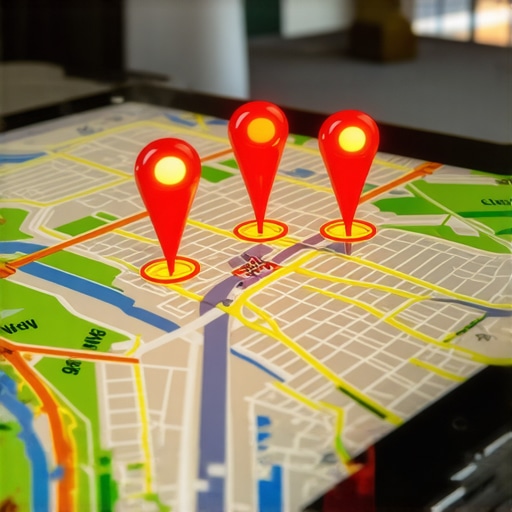
Local search rankings are often an illusion created by your physical proximity to your storefront, meaning you see your business in the top spot while customers a mile away see your competitors. This phenomenon is known as the proximity bubble. To truly understand your real-world visibility, you must bypass your own office Wi-Fi and track search results using localized coordinates. True ranking health requires looking past personalized search parameters to see the unbiased spatial data.
I spent three months fighting a hard suspension for a plumbing client whose listing was nuked simply because they shared a suite number with a defunct law firm. Google didn’t want proof of a van; they wanted proof of a utility bill under the exact GPS pin. That experience taught me that Google’s database is incredibly literal. The platform matches physical, real-world signals with digital records. When those details blur, your visibility vanishes. Many business owners log onto their office desktop, type in their primary service, and celebrate because they see their own pin sitting proudly in the 3-Pack. They fail to realize that their physical device is sitting directly on top of their own business centroid. If they walked across the street, or drove down the bypass, their listing would drop to page two or disappear entirely.
To diagnose whether your business is trapped in this hyper-local bubble, you need to dissect how Google processes physical distance and relevance. Let us examine the technical mechanics of spatial searching. The search engine relies on your mobile device’s GPS chips, nearby Wi-Fi network MAC addresses, and cell tower triangulation. These signals build a precise geographical point. When a query with local intent is processed, Google draws a tight search radius around that point. If your competitor has slightly weaker overall SEO authority but sits three blocks closer to the user, they will often win the placement. This is not because their website is superior. It is because proximity remains one of the heaviest ranking factors in the local algorithm.
“Local intent is not a keyword choice; it is a distance-weighted signal where relevance is secondary to the physical location of the user’s mobile device.” – Map Search Fundamental
The three mile radius that determines your revenue
Your physical storefront address acts as a anchor point that limits how far your digital reach can expand across a metropolitan area. The density of competing listings within a three-mile radius directly dictates how hard your profile must work to maintain visibility. To break out of this physical limitation, you must build high-integrity local trust signals that signal authority beyond your immediate neighborhood.
To understand this spatial math, we must look at how ranking signals degrade over distance. This is why many storefronts notice that their phone stops ringing the moment a searcher crosses a major highway or enters an adjacent ZIP code. If you are struggling with this drop-off, you can explore the specific math we use to fix declining local search rankings to see how we calculate the precise decay of authority signals over distance. This spatial decay is normal, but it can be accelerated if your digital profile is messy or lacks historical authority. For instance, if you have recently altered your business details, you might experience a major ranking shift. You can find helpful steps on the precise way to update your opening hours history without losing rank to ensure that simple operational changes do not trigger a filter update.
Furthermore, businesses often run into issues when their physical address overlaps with other listings. Google hates duplicate entities in its index. If you are renting a virtual office or sharing a commercial space, your profile might get filtered out under the duplication algorithm. Understanding how to resolve address conflicts that trigger googles duplicate filters is vital if you want your pin to remain visible. Without addressing these technical conflicts, any attempt to expand your search radius will fail because the algorithm will continuously hide your duplicate location.
Why your physical address is a liability
A fixed commercial location can restrict your organic visibility if your target audience resides in surrounding suburban markets outside your physical municipal boundary. Businesses without storefronts must manage their service area polygons carefully to avoid triggering automated spam filters. The key to ranking across a wide region is maintaining absolute data consistency across all web platforms.
Many service providers try to bypass this physical limitation by hiding their address and setting an overly wide service area. However, choosing an unrealistic service area can severely hurt your performance. I often direct clients to read about why your service area radius is smaller than you think to understand why broad service settings can actually suppress your listing. When you declare that you serve an entire state, Google compares your claims with your physical location data and often restricts your reach to a tiny fraction of that territory. This mismatch is a primary driver behind profiles suddenly dropping off the grid.
If your listing has already suffered a sudden loss of visibility, you need a systematic diagnostic approach. You can refer to the checklist for fixing a sudden drop in map pack visibility to track down the technical breakdown. Whether the issue is a silent category filter or a localized algorithmic adjustment, identifying the root cause is the only way to restore your real-world rankings.
Local Authority Reading List
- Find the software solutions that actually show your real position by reading tools that actually show your real-time map position across the city.
- Learn how to clean up a damaged profile history after a bad experience with how to clean up a messy business profile history after an agency fail.
- Understand the exact steps required to resolve severe profile suspensions by reading the difference between a soft and hard suspension and how to fix both.
- Discover the specific tools required for checking and maintaining your listing by reviewing the only tools you actually need to keep your business profile healthy.
The diagnostic test for map tracking accuracy
You can uncover your true ranking position by using automated geogrid tracking tools that simulate search queries from precise GPS coordinates across your city. Relying on manual searches from your office computer will only give you skewed data due to personalized search histories and local IP routing. Real data requires simulating hundreds of search coordinates in a grid pattern.
To run a thorough diagnostic, you need the right tools. If you are comparing platforms, you can look at our comprehensive comparing gmb specialized tools against general local listing suites analysis. General SEO tools often miss the nuanced, location-based adjustments of map results. Using specialized geogrid mapping software allows you to view your rankings as a multi-colored heat map. This visually reveals exactly where your proximity bubble pops. You might discover that you rank first within a half-mile of your office, but drop to tenth place once you cross a major intersection.
If you find that your rankings are heavily suppressed, you do not always need a massive marketing agency to fix the underlying issues. You can start reclaiming your positions by exploring fixing low gmb rankings without hiring a massive agency. Often, the solution involves cleaning up minor data conflicts, optimizing your primary category selection, and eliminating spammy keywords that trigger automatic local filters.
The hidden signals that break the proximity wall
To rank outside your immediate neighborhood, you must acquire high-quality user engagement signals, such as driving directions requests, customer-uploaded photos, and highly localized reviews. These behavioral signals prove to the Google search algorithm that users are willing to travel to do business with you. This user behavior effectively overrides the default proximity filters.
One major mistake that business owners make is ignoring duplicate profiles that compete with their main listing. If you have several listings under similar names, Google will likely filter them out. Learn about the right way to consolidate duplicate google business profiles to protect your review history and preserve your local authority. Consolidating your listings ensures that all your authority signals flow to a single, high-performing point on the map.
Additionally, keeping your listing details highly accurate is critical for long-term trust. When you need to recover from a sudden ranking drop, utilizing services to restore trust signals for local seo can help repair damaged data footprints. Rebuilding these core signals ensures that Google continues to view your business as a trusted, authentic provider across your entire target area.