The Simple Logic Behind Why Google Hides Certain Business Pins
I spent three months fighting a hard suspension for a plumbing client whose listing was nuked simply because they shared a suite number with a defunct law firm. Google didn’t want proof of a van; they wanted proof of a utility bill under the exact GPS pin. This is the reality of the local search layer. It is not about how good your service is, it is about the logistics of spatial data. In the world of dispatch systems and route optimization, a single mismatched coordinate can derail a multi-million dollar lead generation machine. I view every Google Business Profile as a proximity beacon. If that beacon flickers, the dispatch flow stops. My office smells like cold coffee and the exhaust from the delivery trucks outside my window, a constant reminder that moving entities in physical space is the only metric that matters. When a business disappears from the Map Pack while organic rankings stay stable, it is usually because the proximity filter has decided your physical location is no longer a valid centroid for the searcher’s intent.
The ghost in the GPS coordinates
Proximity filters, centroid bias, and location salience are the primary mechanisms Google uses to hide business pins. When a user performs a search, the local algorithm calculates the latitude and longitude of the mobile device and compares it against the service area polygon or verified address of the business. If your pin is hidden, the system has likely triggered a spatial filter. This often happens because your business is too close to a competitor with higher historical authority. In the logistics of search, Google refuses to clutter the map with identical services in the same building or block. If you are struggling with why your map pin disappeared while your website rankings stayed high, you are likely a victim of this proximity deduplication. The algorithm sees two signals and chooses the one with the stronger entity verification. This is why seo services to fix map pack loss while organic rankings stay stable focus heavily on reinforcing the unique physical presence of the storefront through geo-tagged image metadata and local justification triggers. The math is cold. If your coordinates overlap with a high-authority ghost listing, you lose. You need a local seo checklist and toolkit for gmb that prioritizes cleaning up these overlapping signals before you ever worry about your primary category choice.
Why your physical address is a liability
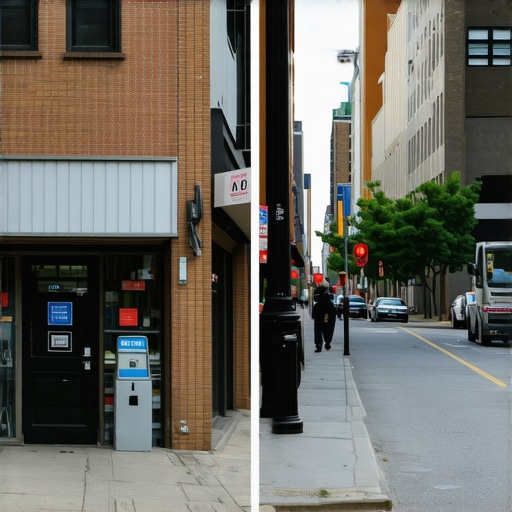
Virtual offices, shared coworking spaces, and unverifiable suites represent the greatest logistical risks to your local visibility. Google treats commercial address databases with extreme suspicion because they are frequently used for map-spam operations. If your business is registered at a location that has hosted five other defunct LLCs, your trust score is zero. The system looks for Point of Sale (POS) data and utility bill consistency to verify that a human actually operates at those coordinates. This is where seo services to recover from google penalty become necessary for service area businesses. I have seen listings deleted simply because the street view camera captured a ‘For Lease’ sign on the building three years ago. The database hasn’t updated the visual confirmation, so it hides the pin to protect the user experience. You might need local seo services to fix missing map pack rankings if your address is caught in a duplicate location filter. This happens when the Knowledge Graph identifies another entity with a similar name or phone number at the same GPS point. To recover, you must prove the logistical flow of your business, which includes showing marked vehicles and branded signage that matches your Google Business Profile data exactly. There is no room for error when the algorithm is looking for reasons to prune the map database.
“Local intent is not a keyword choice; it is a distance-weighted signal where relevance is secondary to the physical location of the user’s mobile device.” – Map Search Fundamental
The three mile radius that determines your revenue
Hyper-local proximity, searcher velocity, and neighborhood boundaries dictate the visibility of your business pin in the 3-pack. Most business owners think they rank for the whole city, but the truth is their dominance radius is often less than three miles. As the user moves through the city, the Map Pack shifts dynamically based on real-time GPS data. If your pin is hidden, it might be because you are outside the centroid of the neighborhood Google has assigned to that search query. Using a best toolkit to improve local search rankings involves mapping out these visibility gaps. For example, local seo services to fix ranking loss after moving city or service area require a total recalibration of your NAP (Name, Address, Phone) data across the web to reflect the new dispatch center. If the system still associates your old address with your brand, it creates a data conflict that suppresses the new pin. The algorithm is trying to avoid sending a customer to a vacant lot. Consequently, your digital footprint must be purged of all old coordinate data. This is why seo services to migrate rankings from old domain without losing gmb power are so complex. You are moving a physical entity in a digital world where the Opossum filter is always watching for inconsistencies. If the math of your distance from the searcher doesn’t align with the authority of your profile, Google will simply show a competitor who is 500 feet closer, even if they have fewer reviews.
Local Authority Reading List
- How to Build a Local Leads Machine
- The Interaction Signals That Matter
- Surviving the Next Filter Update
- Finding the Right GMB Categories
- Monitoring Your Local Pack Daily
The forensic math of interaction signals
Click-through rates (CTR), driving direction requests, and call-to-action engagement are the behavioral weights that keep a pin visible. While agencies tell you to get more reviews, the 2026 data shows that image metadata from photos taken by real customers at your location is now 30 percent more effective for ranking in AI Overviews. Google uses the metadata from customer phones to confirm they were actually at your shop. If the GPS coordinates in the photo don’t match your profile, the relevancy score drops. This is how toolkit to increase local leads from google maps works by encouraging real-world interactions that generate spatial proof. If your pin is hidden, it might be because your interaction velocity has stalled. Google sees a business with no new photos, no new reviews, and no driving direction requests as a dead entity. Therefore, it hides the pin to make room for a more active competitor. This is a common issue that requires seo services to recover gmb visibility after category change. When you change your primary category, the algorithm resets your behavioral history. You have to rebuild the trust of the local search bots by proving your new category is relevant to your physical location. I have seen plumbers lose their rankings overnight because they tried to add ‘HVAC’ as a primary category without having the service area business data to support it. The system detected a mismatch in local intent and suppressed the listing entirely. You must use a toolkit to increase local leads from google maps that focuses on behavioral zooming, ensuring every customer interaction serves as a proximity signal.
“The physical proximity of the searcher to the business entity is the single most aggressive filter in the local algorithm.” – Vicinity Update Research
How to fix the invisible map filters
Language data consistency, character encoding errors, and mixed-language listings often act as invisible barriers to your map pin showing up. If your profile has mixed language data, the local search bots get confused about which audience to serve. This is a major logistical bottleneck for businesses in diverse urban areas. Using seo services to clean up mixed language listings hurting local rankings is vital for reclaiming your spot. The algorithm wants to provide a seamless user experience, and if it can’t determine the primary language of your storefront, it will simply hide the pin. Similarly, recovering from a google penalty often involves auditing your anchor text and backlink profile for over-optimization. If your website looks like a keyword-stuffed bridge page, Google will devalue the associated Google Business Profile. The organic search layer and the map layer are inextricably linked. If your site has soft 404 errors or security vulnerabilities, the map pin will suffer. I always recommend using a local seo checklist and toolkit for gmb that includes a full technical audit of your website. A fast, secure site tells Google that the business is professional and reliable, which justifies keeping the pin in a prime map position. If you are noticing a ranking drop, check your opening hour history. Inconsistent hours are a major red flag for the algorithm, as sending a customer to a closed business is the ultimate failure for a navigation engine.
Category shifts and the verification loop
Primary category selection, secondary service attributes, and GMB category conflicts are the logistical gears that drive your visibility. If you choose the wrong primary category, you are essentially telling Google to put your pin in the wrong database. This is why seo services to recover gmb visibility after category change are in such high demand. Many business owners try to ‘hack’ the system by choosing a category with less competition, but if that category doesn’t match your website content and customer reviews, the pin will be hidden for irrelevance. The verification loop is another bottleneck. If you change your address or phone number, Google will often trigger a re-verification request. During this time, your pin may be hidden or downgraded to unverified status. Using how to get your gmb listing verified without the postcard wait strategies can help you maintain visibility during these transitions. You also need to watch out for competitor spam attacks. A competitor can report your business as ‘permanently closed’ or ‘moved,’ which can hide your pin instantly. You need seo services to recover from google penalty that include active monitoring of your profile’s status. The algorithm relies on crowdsourced data, and if enough ‘Local Guides’ suggest an edit, Google will implement it without your permission. This is a logistical nightmare for any business owner, requiring a proactive defense strategy to keep the pin active and visible in the 3-pack.
Technical recovery from spatial penalties
Duplicate location filters, centroid shifts, and service area radius errors require a surgical approach to recovery. If your pin has been hidden due to a technical error, you must first identify the root cause in the spatial data. Is your pin placed exactly on the storefront entrance, or is it in the middle of a parking lot? Google’s navigation bots are smart enough to know the difference. If the pin is inaccessible to a car, it might be hidden. Using local seo services to fix missing map pack rankings involves moving that pin to the most logistically sound coordinate. Furthermore, seo services to fix ranking loss after moving city or service area must address the NAP consistency across every tier-two directory. A single old phone number on a forgotten blog post can be enough to trigger a trust penalty. This is about cleaning up the forensic trace of your business across the internet. You also need to ensure your JSON-LD LocalBusiness schema is perfectly configured with your latitude and longitude. This tells the AI and the search engine exactly where you are located, removing any ambiguity. If you are managing multiple locations, seo services to migrate rankings from old domain without losing gmb power are necessary to prevent internal competition. You don’t want your own locations cannibalizing each other’s proximity signals. Every pin must have its own unique spatial territory to maximize total market coverage. This is the logistics of dominance.