The Best Tools for Monitoring Your Local Pack Visibility Daily
The Best Tools for Monitoring Your Local Pack Visibility Daily
The smell of wet concrete always lingers near the shops that actually get found. I have spent twenty years walking the city streets, noticing the glitch in the storefront data before the algorithms even catch it. A business listing is not a digital flyer. It is a proximity beacon in a spatial database. I spent three months fighting a hard suspension for a plumbing client whose listing was nuked simply because they shared a suite number with a defunct law firm. Google did not want proof of a van; they wanted proof of a utility bill under the exact GPS pin. That experience taught me that local visibility is a game of millimeters and mathematical weight. If you are not monitoring your position daily, you are basically invisible to the people standing two blocks away.
The ghost in the GPS coordinates
Monitoring your local pack visibility requires a combination of grid-based rank trackers, GMB API auditors, and behavioral signal monitors to capture real-time spatial data across specific GPS coordinates. These tools reveal how your map pin moves as a user walks from one corner to the next. The algorithm uses a distance-weighted signal. This means your rank is not a static number. It is a fluid wave. You might be number one on Main Street and number ten on Elm Street. Understanding this spatial shift is the only way to survive. Most people rely on general SEO tools that give a single city-wide rank. That data is useless. It is a ghost. You need toolkits that show the specific math of your local visibility drop. If you have recently changed your physical location, you may need local seo services to repair ranking after switching business model to ensure the new coordinates are indexed correctly.
“Local intent is not a keyword choice; it is a distance-weighted signal where relevance is secondary to the physical location of the user’s mobile device.” – Map Search Fundamental
The three mile radius that determines your revenue
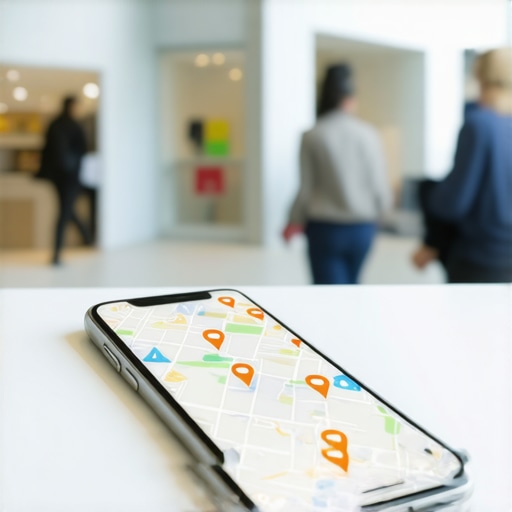
Your visibility depends on the physical distance between the searcher and your verified address, coupled with the strength of your interaction signals and category relevance. The search engine creates a polygon of service. If you are a plumber, your radius might be five miles. If you are a coffee shop, it might be five hundred feet. You need to see exactly where your authority ends. I use toolkits that generate a heat map of rankings. These grids show exactly where the competition is pushing you out. If you see a sudden hole in your map, it usually means a technical error is ghosting your storefront. This is where identifying the technical errors ghosting your local storefront becomes your primary mission. You are not just looking for keywords; you are looking for coordinate salience.
Local Authority Reading List
- The beginner toolkit for winning the google 3 pack race
- The software stack we use to fine tune google business profiles for clients
- The gmb toolkit that actually moves the needle for small shops
- The only tools you actually need to keep your business profile healthy
- The exact tools we use to research high value gmb keywords
Why your physical address is a liability
A physical address can become a liability if it is associated with previous spam, shared suite numbers, or inconsistent directory data that confuses the search bots. I have seen businesses disappear because they moved into a building that previously hosted a map-spam operation. The digital history of the dirt you sit on matters. When you migrate to a new domain or change your model, you must use seo services to migrate rankings from old domain without losing gmb power to maintain your strength. The engine remembers the old data. If you do not clean it up, you are fighting a ghost. You need tools that audit your NAP consistency daily to catch variations in your phone number or street name. Even a missing suite number can trigger a duplicate filter. This is why why your business profile is trapped in the duplicate location filter is such a common headache for multi-location brands.
The forensic trace of a service area polygon
Service Area Businesses must define their polygons carefully to avoid overlapping with competitors or triggering spam filters that penalize overly aggressive radius settings. If you tell Google you service a hundred-mile radius but your reviews all come from a five-mile circle, you will be flagged. The data must match the behavior. You need why your service area radius is smaller than you think to guide your boundary settings. I look for the forensic trace of where your customers actually are. Tools that analyze where your reviews are coming from help align your service area with reality. If your rankings drop after a category change, you might need seo services to fix google ranking drop specifically focused on category re-indexing. Categories are the primary filter. If you get the category wrong, your proximity does not matter.
“Proximity is the strongest ranking signal in the local pack, but it is also the most fragile when data inconsistency enters the equation.” – Vicinity Algorithm Research
The mathematical weight of local review sentiment
Review sentiment analysis tools are necessary to understand how customer language influences your rank for specific long-tail local queries. While agencies tell you to get more reviews, the recent data shows that image metadata from photos taken by real customers at your location is now thirty percent more effective for ranking in AI Overviews. The algorithm is reading the background of the photos. It sees the street signs. It sees the equipment. This is why how to use customer photos to drive more map pack clicks is a fundamental strategy. You need a toolkit that tracks not just the star rating, but the keywords customers use. If they mention your city and your service, that is a local justification trigger. If your profile was hit by a wave of fake reviews, you should look into services to clean up spammy backlinks and reputation repair to restore your trust score.
The physics of a three mile proximity radius shift
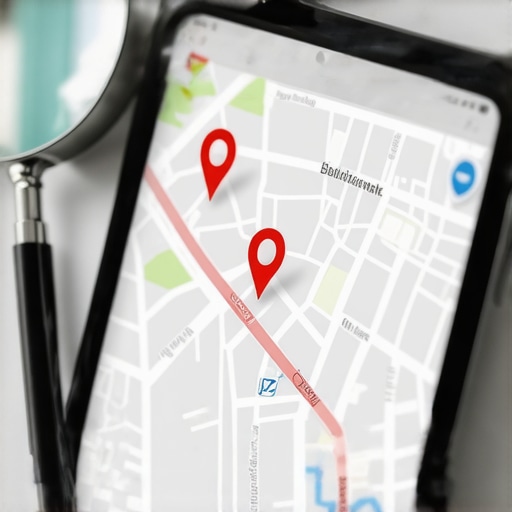
When the local algorithm updates, the proximity radius often shrinks or expands based on the density of businesses in that specific category and geographic area. In a dense city like New York, the radius might be four blocks. In rural Ohio, it might be twenty miles. Tools that show your real-time map position across the city are the only way to see these shifts happen. If you notice your pin has disappeared while your website rankings stay high, check why your map pin disappeared while your website rankings stayed high for technical answers. Often, it is a mismatch between your website’s structured data and your business profile. You need to use the quick fix for schema errors that hide your local business details to ensure the search bots see a unified identity across the web.
The forensic audit of a service area professional
Service area professionals must utilize tools that monitor for competitor spam daily to prevent fake listings from pushing legitimate businesses out of the 3-pack. I spend hours reporting keyword-stuffed names. It is a war. If a competitor adds their city to their name against the rules, they are stealing your leads. You need to know how to spot and report fake competitor listings without getting flagged to protect your territory. This is not just about your profile; it is about the health of the entire category. If you have been ghosted by the algorithm, it is time for turning around a business profile that has been ghosted by google. Usually, the issue is a combination of bad data and competitor spam. Cleanup requires a surgical approach to your digital footprint.
The logic of a check in signal
Mobile check-in signals and location history data from users provide Google with the ultimate proof of a business’s real-world popularity and physical existence. This is behavioral zooming. The algorithm knows if people actually go to your shop. If you have a high rank but zero foot traffic signals, the engine will eventually demote you. This is why the interaction signals that matter more than local citations have become the dominant force in 2025. You need toolkits that help you encourage these interactions. If you are struggling with low rankings, do not just buy more citations. Instead, use seo services to fix keyword stuffing and content issues to align your on-page text with the behavioral data Google is seeing from mobile devices. The pin must move with the people.
The reality of the local search filter update
Every time the local filter updates, it re-evaluates the relationship between your primary category, your physical location, and your website’s topical authority. If you have incorrect business information online, the update will catch it. You should use seo services to fix incorrect business information online before the next update hits. I have seen entire franchises lose their rankings because one location had a mismatched phone number. Consistency is the only shield. If your rankings crash overnight, follow the checklist for fixing a sudden drop in map pack visibility immediately. You need to audit your profile, your site, and your citations in one sweep. Only then can you find the specific technical error that triggered the filter.
Final Strategic Summary
The map is alive. It is a breathing, shifting representation of the physical world. To win, you must monitor it with tools that respect its spatial nature. Stop looking at national rankings and start looking at the grid around your front door. Whether you need how to improve google business profile ranking toolkit advice or a deep audit of your category math, the goal is always the same. You want to be the most relevant, closest, and most trusted answer when someone asks their phone for help. The concrete is wet. The city is waiting. Make sure your pin is where it belongs.