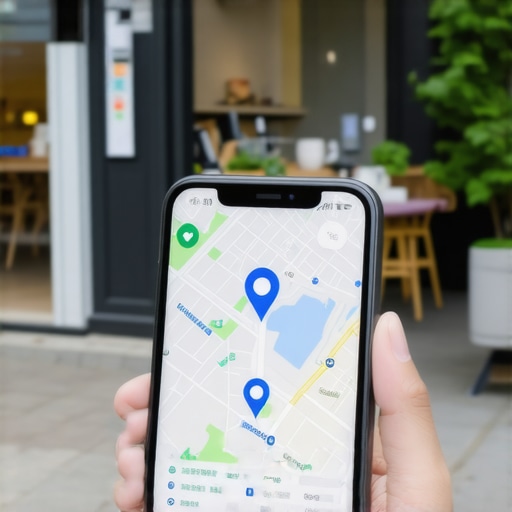
Why Your Business Categories Might Be Keeping You Off the Map
Google Business Profile categories serve as the absolute foundation of your local entity relevance, determining whether you trigger proximity grids or get mathematically filtered out. If you select the wrong primary classification, your storefront pin simply vanishes from the local three pack regardless of your citation volume or review count. The spatial database requires clean, unambiguous category taxonomies to calculate searcher intent against your coordinates.
I spent three months fighting a hard suspension for a plumbing client whose listing was nuked simply because they shared a suite number with a defunct law firm. Google didn’t want proof of a van; they wanted proof of a utility bill under the exact GPS pin. That brutal process revealed how unforgiving the local algorithmic engine is. When the system detects overlapping classification data or conflicting spatial signals, its default safety response is to initiate an immediate hard suspension. If you want to survive, you must understand that category choices are not cosmetic labels; they are database entry points that govern your entire physical visibility radius.
“Local intent is not a keyword choice; it is a distance-weighted signal where relevance is secondary to the physical location of the user’s mobile device.” – Map Search Fundamentals
Many businesses unknowingly fall into optimization traps by trying to stretch their category selections too wide. This dilution forces search engines to treat the listing as a low-confidence entity. To combat this, you need a highly specialized strategy that aligns with contemporary search engine filters.
The hidden algorithmic penalty of category dilution
Diluting your primary category with unrelated secondary classifications tells search engine bots that your local entity lacks specialized geographic authority. Every time you add a secondary classification that does not align with your core service schema, you lower your proximity confidence score in the map pack. Local intent relies on high density relevance. If you mix residential plumbing categories with commercial general contracting, the proximity engine struggles to place your pin in precise search pools.
This dilution behaves exactly like an algorithmic filter, slowly suppressing your visibility. Businesses experiencing this often believe they have been hit with a manual penalty. Instead, they are simply failing the basic category validation check. You can resolve these technical classification issues by looking at a recovery strategy for complex google business profile penalties to systematically rebuild your entity trustworthiness. The goal is to send a singular, high-strength signal to the local indexing bots.
We have also noticed that adding too many service categories acts as a trigger for automated verification sweeps. When an algorithm scans a profile and detects five distinct, highly competitive niches, it flags the listing for a manual review or a sudden video verification request. You can check how your categories perform in real time across different neighborhoods using specialized geographical tracking software. Read about the tools that actually show your real time map position across the city to diagnose whether category choices are limiting your spatial range.
The logic behind selecting a dominant classification
Your primary category holds approximately seventy percent of the total algorithmic weight for ranking in the local three pack. Selecting this classification is the single most critical decision you will make on your local search journey. It must match the core search queries that drive your actual revenue, rather than a broad, generic industry term. If you operate as an estate planning attorney, choosing “lawyer” instead of “estate planning attorney” as your primary category exposes you to unnecessary competition against personal injury firms.
To bypass this issue, you must run a structural audit on your closest geographic competitors. It is vital to reverse engineer what the top three ranking listings are doing to secure their positions. You can uncover these hidden patterns by reading about a simple trick to find the gmb categories your top competitors hide. This competitive intelligence allows you to make data-backed adjustments without triggering spam filters.
Remember that changing your primary category is a highly sensitive update. If you make this change on an older, established listing, the system may flag it as an ownership transfer or suspicious activity. This risk is particularly high for service area businesses. To avoid structural downtime, learn how to handle a suspended profile after changing your primary category. Taking a methodical approach minimizes the risk of losing years of accumulated organic trust.
Local Authority Reading List
- Find the exact metrics behind geographic ranking behavior at the data behind why certain neighborhoods are harder to rank in.
- Understand how user behavior dictates real map visibility with the interaction signals that matter more than local citations.
- Clean up old, conflicting geographic data with our guide to how to clean up a messy business profile history after an agency fail.
- Discover the specific toolsets required for sustained growth at the gmb toolkit that actually moves the needle for small shops.
Why service area businesses suffer from category conflicts
Service area businesses face a double penalty when they configure broad categories alongside extensive, unrealistic geographic service boundaries. The local search engine uses a virtual compass to draw your service boundaries. When you claim to serve a fifty-mile radius while classified under a highly localized category like home repair, the system experiences a relevance conflict. The physical math of a local query cannot reconcile a massive physical territory with a hyper-local category.
To fix this mismatch, you must align your actual operational data with your category architecture. When your service boundaries are too large, your visibility shrinks to a microscopic radius around your verified address. To correct this spatial restriction, explore our analysis on why your service area radius is killing your rank in nearby towns. Shrinking your claimed service area to a tight, realistic polygon will actually expand your search visibility.
Many service area operators make the critical mistake of renting post office boxes or utilizing virtual offices to bypass these distance calculations. This practice is a direct violation of terms of service. For a sustainable setup that protects your business, consult the virtual office survival guide for service area professionals. Creating a compliant, highly focused category-to-address relationship is the only way to avoid manual spam sweeps.
How to clean up old listings to recover rankings
Orphaned business profiles and duplicate listings using legacy categories will actively siphon off your primary listing’s local authority. When Google scans your brand name across the web and finds old, closed, or incorrectly categorized listings, it splits your geographic ranking power. This architectural confusion leads to immediate ranking stagnation. To clean up this historical digital footprint, check local seo services to clean up old or closed locations. Consolidating your physical listings under a unified category structure is a prerequisite for local dominance.
Duplicate profiles are particularly damaging when they exist at the same coordinates. If you have multiple listings for the same business entity, the local engine will filter both of them out of the three pack. To resolve this without losing your built up authority, implement the right way to consolidate duplicate google business profiles. This ensures your review history is safely merged into a single, high-performing asset.
If your profile has been ghosted or silently filtered due to persistent category conflicts, you must perform a systematic data cleanup. You can restore your search engine presence by following the strategies in turning around a business profile that has been ghosted by google. Rebuilding your technical foundation from scratch is often faster than waiting for an unoptimized profile to fix itself.
The critical role of structured schema in category validation
Applying correct LocalBusiness structured data on your website confirms your primary category selection to search engine crawling spiders. The category you select in your dashboard must match the JSON-LD schema injected into your website’s header code. If your business profile claims you are an “HVAC Contractor” but your website schema is configured as a general “LocalBusiness,” the discrepancy lowers your overall organic trust score.
Many automated website builders inject broken, generic, or outdated schema types that conflict with your primary categories. To pinpoint and resolve these markup discrepancies, check our guidelines on fixing the soft 404 errors that keep your local pages out of search. A clean, error-free technical schema deployment is the final piece of the local SEO puzzle.
When your website schema, your business category, and your off-site citations all point to the exact same classification entity, your local visibility will scale rapidly. This consistency allows you to rank across competitive ZIP codes without relies on spammy tactics. Invest in building a clean, technically sound local engine to protect your business from future algorithmic core updates.