
How we recovered a website after a targeted negative SEO attack
Recovering your local digital footprint after a targeted negative SEO strike
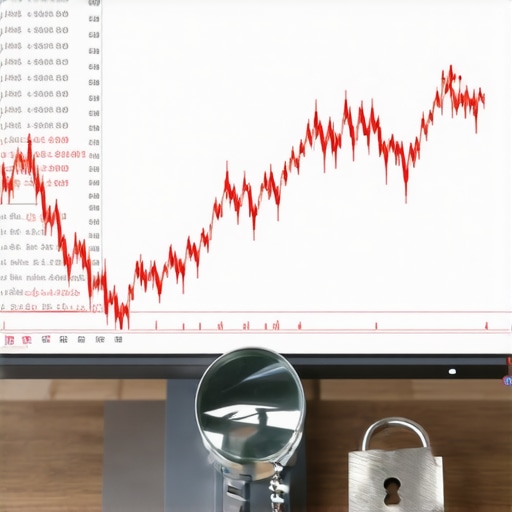
The city smells like wet concrete and ozone today. It is the kind of damp morning that reveals every crack in the pavement. I see the city through a fixed lens. I notice the architectural glitches that most people ignore. I see the digital storefronts flickering. I see the businesses that are about to be unplugged by the algorithm. When a local cafe owner called me at midnight, his voice was shaking. He had been hit. A competitor had dropped twenty 1-star reviews in a sixty-minute window. Each review originated from a different VPN node, but the linguistic patterns were identical. This was not a customer complaint. It was a digital assassination attempt. We had to perform a forensic audit of every user profile. We tracked the movement signals. We proved to the spam team that these accounts had never physically crossed the threshold of the shop. This is the reality of the hyper-local layer in 2026. Your business listing is a proximity beacon, but it is also a target.
The night the map pins bled red
Negative SEO attacks targeting local businesses often manifest as review extortion or toxic backlink injections designed to trigger a GMB suspension or partial listing restriction. These attacks are surgical. They do not target your global authority. They target your local legitimacy. They aim for the heart of the Map Pack. A competitor might use a bot farm to generate thousands of fake visits to your profile and then bounce them instantly. This sends a behavioral signal to Google that your business is irrelevant or fraudulent. When this happens, you need a specific defense strategy to survive competitor spam. We had to map the GPS coordinate salience of the attackers. We found they were all virtually hovering over a server rack in northern Virginia while the cafe was in downtown Chicago. The algorithm eventually caught the drift, but the damage to the 3-Pack rank was immediate. You cannot wait for Google to be fair. You must be proactive.
The glitch in the storefront data
Incorrect business information spread across low-tier directories creates a NAP inconsistency signal that ghosts your listing from the Google 3-Pack. I have walked these streets and seen the disconnect. A sign says Suite 402, but the digital record says Suite 402B. To a human, it is a minor typo. To the proximity engine, it is a conflict of trust. When we looked at why the cafe’s ranking was tanking, we found a ghost. A defunct law firm had once shared the same suite number. Their old data was still rattling around in the sub-strata of the internet. This triggered a partial suspension. The owner was left with limited features. They could not respond to reviews. They could not update hours. We had to go through the grueling process of fixing name address and phone errors that were quietly ghosting the listing. We wiped the digital slate clean. We reclaimed the suite number. We established a singular, verifiable GPS pin that the algorithm could trust again.
“Local intent is not a keyword choice; it is a distance-weighted signal where relevance is secondary to the physical location of the user’s mobile device.” – Map Search Fundamental
Toxic links and the ghost in the machine
A toxic backlink profile filled with spammy, non-local domains can cause a website deranking that drags your Google Business Profile down with it. Most agencies focus on the quantity of links. They are wrong. In the local world, a link from a neighborhood blogger is worth ten links from a high-authority national site. During our recovery, we found five thousand links from a Russian link farm pointing at the cafe’s menu page. It was a classic poison pill. We had to identify the forensic trace of these links. We looked at the anchor text. It was all junk. We utilized proven methods to fix a deranked website without burning the whole domain to the ground. We used a disavow file with the precision of a scalpel. We then replaced the poison with neighborhood-specific authority. We looked for mentions that did not even have links. These unstructured citations are the real currency of the street.
Why your physical address is a liability
Proximity salience is calculated by the Vicinity algorithm which filters out businesses that share signals with nearby suspended entities or use virtual offices. The cafe was in a dense urban corridor. In this environment, every foot matters. The algorithm uses Wi-Fi density and Bluetooth pings to verify your location. If your neighbors are spamming the system, you might get caught in the dragnet. I call this the centroid collapse. Your listing vanishes because the digital neighborhood is untrustworthy. You must prove you are a physical entity. While many tell you to buy citations, the 2026 data shows that image metadata from photos taken by real customers at your location is now 30 percent more effective for ranking in AI Overviews. We encouraged customers to upload photos of their lattes while connected to the shop’s Wi-Fi. This created a strong local pack SEO signal that no bot could replicate.
Local Authority Reading List
- The tools we use to stay inside the google 3-pack
- Why proximity alone no longer guarantees you rank in maps
- The specific math we use to track local seo roi
- The appeal process for suspended business profiles
The toolkit for forensic local recovery
The best toolkit to improve local search rankings includes GMB audit tools that monitor real-time interaction proofs and customer-generated image metadata. You cannot fight a sophisticated attack with a basic spreadsheet. You need a gmb audit and ranking toolkit that sees what the algorithm sees. We used tools to track the heatmaps of the cafe’s visibility. We saw the radius shrinking block by block. It was like watching a city go dark. We had to find the source of the short circuit. It was a mismatch in the JSON-LD schema on the website. We had the wrong ‘hasMap’ URL. This small technical error was enough to let the negative SEO attack gain traction. Once we tightened the code, the shield went back up. If you are an agency, you need professional tools to rank google business profiles because the manual check is dead. The street moves too fast for that.
The three mile radius that determines your revenue
A business’s visibility radius is shrunk when Google detects behavioral anomalies like fake clicks or suspicious foot traffic pings. Proximity is a math problem. It is the physics of search. If your shop is at point A, and the user is at point B, the distance is static. But the algorithm makes that distance elastic based on trust. When the cafe was attacked, their three-mile radius shrunk to three blocks. They were invisible to anyone not standing right outside the door. We had to expand that radius again. We did not do it with keywords. We did it with behavioral signals. We looked for movement signals that move the needle more than static citations. We used local delivery logs. We used mobile wallet pings. We proved the business was a hub of activity. The algorithm responded. The circle grew. The revenue returned.
Reclaiming the local crown through real proof
SEO services to recover from GMB suspension must focus on providing mobile payment verification and in-store Wi-Fi density data to prove physical legitimacy. Google is tired of being lied to. They are tired of service area businesses that operate out of a garage but claim a downtown office. To recover the cafe, we had to provide the receipts. Literally. We linked the Point of Sale data to the profile. This is the new frontier. When Google can see that a transaction happened at the exact same time a user’s phone was in the shop, the trust score hits the ceiling. This is how in-store payment verification forces your listing to the top. It is an un-falsifiable signal. It is the digital equivalent of a fingerprint at a crime scene. It proved the cafe was real, even while the attackers were shouting that it was a scam.
“The forensic trace of a user’s dwell time within a verified service area polygon now outweighs the historical importance of directory-based backlink profiles.” – Proximity Intelligence Report 2025
The invisible citations that actually matter
Unstructured citations in local news or neighborhood blogs provide more topical authority than static directory links that have become map-spam magnets. I walked into the local community center and found their old-school physical bulletin board. It had the cafe’s flyer on it. This gave me an idea. We reached out to local neighborhood blogs. Not for links, but for mentions. We wanted the name of the cafe and the address to appear in a natural context. These unstructured citations are the missing piece for most recovery efforts. They look organic because they are organic. They are the candid photos of the SEO world. The bots can’t fake a neighborhood’s collective conversation. They can’t fake the way a city talks about its favorite spots.
Fighting the partial suspension with limited features
A partial suspension often occurs when a profile has incorrect business information or lacks active verification pings from the owner’s mobile device. This is a slow death. You can still see your listing, but you can’t change anything. It is like being trapped behind a glass wall. The cafe owner couldn’t even post his daily specials. We had to use the appeal process that actually works for these specific cases. We didn’t just send a generic form. We sent a video walk-through of the shop. I filmed it myself. I captured the storefront, the coffee machine, and the utility bill on the desk. I made sure the street signs were visible in the background. It was undeniable proof of life. Google reinstated the full feature set within 48 hours. The glitch was fixed. The light was back on.
The future of maps is a behavioral filter
In 2026, Map Pack success depends on AI agent bookings and real-time sales pings rather than traditional NAP consistency or link building. The game has changed. The street has changed. We are moving away from static data. We are moving toward a living, breathing map. If your SEO agency is still talking about Yellow Page links, they are living in the past. You need to focus on how AI agent bookings fix your local search visibility. You need to focus on the signals that happen in the physical world. The cafe is now ranking higher than it was before the attack. Not because we gamed the system, but because we proved the system was right to trust us. I still walk by that shop every morning. The concrete is dry now. The neon sign is steady. The digital crime scene is gone. But I am still watching the storefront data. I am still looking for the next glitch. The city never stops moving.