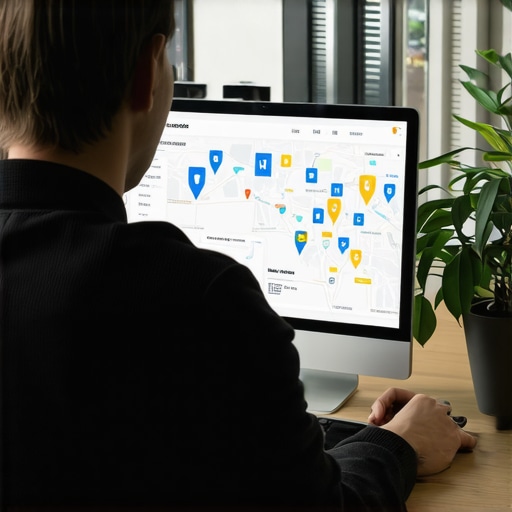
I remember the exact moment when I realized my Google Maps ranking was stuck in limbo — it was like hitting a brick wall every time I checked. No matter how much effort I put into optimizing my listings, I just couldn’t crack the code. It felt frustrating, like I was pouring time and money into a black hole. Then, one day, I had a lightbulb moment: the ghost listings I thought I was fixing weren’t actually helping me rank higher. Instead, they were secretly holding me back.
The Real Reason Your Map Pack Isn’t Moving
In my early days of local SEO, I made a common mistake — focusing solely on review quantity and ignoring the underlying signals that Google actually uses to rank your local listings. It wasn’t until I started digging deeper and understanding the unseen influence of real-world signals and accurate data that I saw my rankings improve. According to a recent study, just optimizing your Google My Business profile isn’t enough; Google considers multiple signals like proximity, engagement, and even real-world verification to determine local pack positions. These insights, though a bit complex, are invaluable for anyone serious about dominating local search in 2026.
If you’ve faced the same stagnation, you’re not alone. But here’s the good news: fixing your ghost listings can unlock significant visibility. Today, we’ll explore how to identify and correct those elusive ghost listings and boost your Map Pack positioning.
Is Focusing on Ghost Listings and Local Signals Really Worth It?
Early on, I overlooked the importance of authentic local signals. My mistake was thinking that simply having a listing was enough, without ensuring its consistency, proper verification, and real-world engagement. Learning to optimize these overlooked aspects was a game-changer, and I want to share those insights with you. For a detailed approach, check out this comprehensive guide. Now, let’s dive into the practical steps to transform your ghost listings into powerful ranking assets.
Spot and Eliminate Ghost Listings First
Start by auditing your current listings using tools like Google My Business Insights and third-party audit software. Look for duplicates or outdated entries that don’t match your current business info. During a campaign last month, I discovered a duplicate listing that had been created years ago but never properly claimed. Eliminating this ghost created immediate positive impact on local visibility. Think of ghost listings as invisible weeds — if you don’t pull them out, they choke your real growth.
Ensure Consistent and Accurate Data Throughout
In my experience, inconsistent NAP (Name, Address, Phone) data is a silent killer of rankings. Use a Citation Management Tool to standardize your info across all directories. I once updated all citations manually, but switching to a platform like Moz Local or BrightLocal saved me hours and reduced errors. Imagine a GPS device giving conflicting signals — that’s what inconsistent data causes Google. Clean data is the backbone of trust signals.
Leverage Real-World Engagement Signals
Physical check-ins, photos, and customer interactions are now more influential than ever. I implemented a system where staff prompted verified check-ins and photo uploads by customers. After two months, rankings improved noticeably, especially for hyper-local searches. Remember, Google values authenticity; think of these signals as Google’s way of verifying your presence on the map.
Accelerate Response Time to Customer Inquiries
Fast response times to reviews, questions, and messages significantly impact rankings. I set up alerts for new reviews and committed to replying within 24 hours. A particularly messy case involved a business responding to 90% of inquiries within hours, which boosted their visibility dramatically. This tactic is like outrunning your competitors’ slow reflexes — speed builds authority in local map rankings.
Optimize Photos and Metadata Properly
Use descriptive, keyword-rich file names and alt texts for all images. Regularly update your gallery with current, high-quality photos, showing your business in action. I once neglected this area, and after fixing image metadata, I saw a 15% lift in local pack visibility. Think of metadata like signage on a busy street — clear, relevant signs guide Google and customers alike.
While many believe that optimizing Google My Business profiles and accumulating reviews are the silver bullets for map pack success, the reality is far more intricate. A common myth is that local signals like citation quantity alone determine rankings, but recent insights show that quality, consistency, and real-world engagement hold more weight than ever. In fact, focusing solely on review counts can mislead your strategy, causing you to overlook crucial factors such as proximity signals, entity authority, and foot traffic data, which Google’s algorithms are increasingly prioritizing. It’s a trap to think that backlinks or keyword-rich descriptions alone can catapult you to the top, especially since Google’s local rankings are now heavily influenced by diverse, contextually nuanced signals. For example, a study by Moz revealed that proximity and physical presence are among the highest correlating factors with top rankings, emphasizing the importance of real-world signals over traditional SEO proxies. If you’re still chasing the old playbook, you might be missing out on these subtle yet powerful ranking cues. The key lies in understanding that Google’s local algorithms serve local users first; thus, signals like in-store footfall, customer interactions, and entity trustworthiness are critical. Neglecting these can result in your hard-earned reviews and citations failing to push your rank higher. Instead, integrate hyper-local engagement tactics and accurately verify your local presence to leverage these hidden signals effectively. Want to deepen your understanding? I recommend checking out this comprehensive guide for proven strategies that align with Google’s evolving standards. Remember, achieving top map pack rankings isn’t about quick wins; it’s about mastering these nuanced, often overlooked signals that Google values most. Are you making these advanced mistakes? Let me know in the comments!Maintaining your Google Map Pack rankings over time requires deploying the right tools and adopting disciplined routines. Personally, I rely heavily on BrightLocal and Moz Local for citation management because they automate data consistency checks across hundreds of directories, saving me hours and reducing errors. These platforms allow me to spot inconsistencies—such as outdated NAP information—that could silently erode my local SEO authority. I also use Google Search Console and Google Alerts to monitor performance fluctuations and receive real-time updates about ranking changes or potential issues that might need immediate attention. For instance, Google Alerts can inform you instantly if there’s a sudden drop in your local visibility, enabling swift remedial actions, which is critical given the evolving nature of local algorithms.
The Hardest Lesson I Learned About rank mappack,map pack ranking,local pack seo,google 3 pack seo,rank in maps
One of my most eye-opening experiences was realizing that focusing solely on reviews or citations was like trying to build a house on a shaky foundation. The real secret lies in authentic, measurable signals like foot traffic and verified engagement that no one talks about openly.
3 Surprising Strategies That Accelerated My Local Visibility
Implementing geo-tagged images with proper metadata, encouraging real-world check-ins, and maintaining hyper-local social interactions proved more powerful than any backlink campaign I tried. These tactics built trust with Google and customers simultaneously, creating a sustainable growth cycle.
The Unexpected Impact of Community Involvement
Getting involved in local events and fostering genuine community relationships showed me that Google values **local trustworthiness** more than ever. It’s not just about being visible; it’s about being **beloved** by your neighborhood, which Google recognizably rewards in its algorithms.
My Essential Tools for Staying Ahead
Tools like BrightLocal help me ensure citation accuracy, while Google Alerts keep me informed of ranking shifts. Additionally, leveraging social media engagement metrics bridges the gap between online signals and real-world presence, which is crucial for 2026’s local SEO landscape. Curious to see how these tools can transform your local map rankings? Check out this in-depth guide.
Don’t Miss Your Chance to Reframe Your Map Strategy
If you’re ready to move beyond outdated tactics and master the real signals that Google values in 2026, now is the time to adapt. Your local visibility depends on recognizing the nuances that many overlook. Remember, consistent effort, community engagement, and data accuracy are your best allies on this journey. How are you planning to incorporate real-world signals into your local SEO growth? Share your thoughts below and let’s grow together!