Fixing the Soft 404 Errors That Keep Your Local Pages Out of Search
Fixing the Soft 404 Errors That Keep Your Local Pages Out of Search
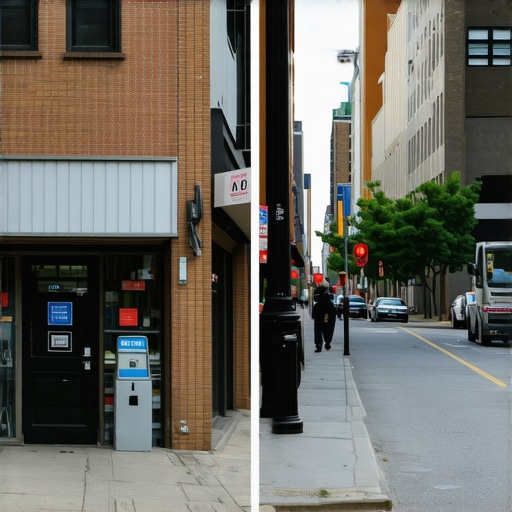
I stood on the corner of 4th and Main, the smell of wet concrete rising from the sidewalk as a light rain blurred the neon signs. My camera was ready to capture the reality of the storefront, but the digital reality was a mess. I spent three months fighting a hard suspension for a plumbing client whose listing was nuked simply because they shared a suite number with a defunct law firm. Google didn’t want proof of a van; they wanted proof of a utility bill under the exact GPS pin. This battle taught me that a local listing is not just a profile; it is a proximity beacon in a spatial database that demand absolute accuracy.
The ghost in the GPS coordinates
Soft 404 errors occur when a page tells a search engine it exists while providing no actual value, leading to local pages being dropped from the index. These errors are the silent killers of the 3-Pack, especially when your location pages lack unique geographic identifiers or service-specific data points that prove your physical presence. When a bot crawls your site and finds a page with no unique neighborhood signals, it treats that page as a dead end. This is why how to stop soft 404 errors from draining your local ranking power becomes the most important question for any multi-location business owner. You cannot just copy and paste city names and expect the algorithm to respect your boundaries. The logic of a check-in signal or the mathematical weight of local review sentiment requires more than just a template. It requires a forensic approach to data consistency. If your location page is ghosted, your map pin follows soon after. This is a common reason why your map pin disappeared while your website rankings stayed high. The disconnection between the web layer and the map layer is often rooted in these empty status codes. You need a gmb ranking toolkit for small business owners to audit these technical gaps before they turn into hard filters. The math of local search is ruthless; it values the physical location of the user mobile device above almost everything else.
“Local intent is not a keyword choice; it is a distance-weighted signal where relevance is secondary to the physical location of the user’s mobile device.” – Map Search Fundamental
Why your physical address is a liability
Your physical address becomes a liability when it triggers duplicate filters or proximity conflicts that hide your business from nearby potential customers. If you are caught in a building with twenty other service providers, Google might filter you out to avoid cluttering the map with the same category at the same lat/long. This is why how to resolve address conflicts that trigger googles duplicate filters is essential knowledge for urban businesses. I have seen businesses disappear because they were too close to the city centroid, yet they didn’t have the behavioral signals to justify the prime real estate. Proximity is a double-edged sword. If you are too close to a competitor with ten times your review velocity, you get suppressed. You must understand the physics of a 3-mile proximity radius shift. As a street photographer, I see the storefronts that are empty while their digital profiles claim they are busy hubs. Google sees this too through POS data integration and user movement patterns. If your profile claims to be open but no one ever stops there, your rank will tank. This is often the best toolkit to improve local search rankings; ensuring your digital footprint matches the physical reality of your street. If you are suffering a sudden ranking drop, it is time to check if your address has been flagged as a shared workspace or a virtual office rental.
The three mile radius that determines your revenue
The three mile radius around your business is the primary battlefield where your review velocity and proximity signals decide if you appear in the Map Pack. Beyond this radius, your relevance must be significantly higher to outrank closer competitors. This is where the difference between proximity and relevance in modern local search becomes clear. To expand your reach, you need how to use geo-tagged images to strengthen your local relevancy. Real photos taken by real customers at your location provide an information gain that stock images can never replicate. In my experience, a candid shot of a technician working in a specific neighborhood is worth more than a thousand words of SEO copy. The algorithm is looking for the forensic trace of a service area polygon. It wants to see that your vans are actually in the driveways of the zip codes you claim to serve. If you are using local seo services for cleaning historic citation spam campaigns, you are essentially trying to scrub the lies of the past to make room for the truth of the present. Cheap citation blasts to dead directories only create noise. You need high-quality, unstructured citations from neighborhood-specific sources to build real trust.
Local Authority Reading List
- The Ultimate Guide to Google 3-Pack SEO
- Mastering Map Pack Rankings in 2025
- The Tools We Use to Stay Inside the Google 3-Pack
- The Checklist for Auditing New Business Profiles
- The Appeal Process for Suspended Profiles
The math of a local check in signal
A local check-in signal provides the mathematical proof of a business’s physical popularity which Google uses to validate its rank in high-competition categories. When users move through your storefront with their location history turned on, they are essentially voting for your business with their feet. This is far more powerful than any backlink. This is why the interaction signals that matter more than local citations are the new frontier of local search. If your website is suffering from soft 404s, these signals cannot anchor to your digital identity. You become a ghost. I once investigated a case where a top-ranking roofing company vanished overnight. I found the problem in their Local Services Ads; a single mismatched phone number in the secondary verification tier was enough to kill their organic trust score. They needed emergency seo services for sudden ranking drop to fix the mismatched data. You cannot have one phone number on your website and another in your LSA dashboard. The system views this as a lack of verification. Local seo services to fix banned gmb listing often start with a simple audit of these basic facts. If you want to know what is a gmb ranking toolkit, it is the set of tools that find these invisible errors before they become permanent penalties.
The forensic trace of a service area polygon
Defining your service area polygon correctly ensures that Google understands exactly where your mobile workforce operates and where your proximity signals should carry weight. Many owners set a radius that is far too large, which dilutes their local authority. You should focus on specific zip codes where you have the highest density of customers. This is explored in why your service area radius is smaller than you think. When you move, you face the risk of a total ranking collapse. Using local seo services to fix ranking loss after moving city or service area is the only way to migrate your trust from one GPS pin to another. The algorithm remembers your old location; you have to prove the new one is legitimate. This is where seo services to fix over aggressive location page strategy penalties come into play. If you created fifty pages for fifty tiny suburbs but you only have one office, Google will likely hit you with a doorway page penalty. You need to consolidate that history without losing your reviews. Check out how to consolidate multiple listings without losing your review history to keep your momentum during a transition.
The specific JSON LD attributes that trigger voice search
Structured data using LocalBusiness schema provides the explicit metadata that AI models and voice assistants use to answer local queries with high confidence. You must include your opening hours, your exact coordinates, and your primary service categories within your code. This prevents the bot from getting confused. If you have errors here, you might see the quick fix for schema errors that hide your local business details as a necessary step. Don’t just use a generic plugin. You need the exact way to use local schema markup without triggering a spam filter. Over-optimization in your schema, such as keyword stuffing your descriptions, can lead to a manual review. I have seen listings ghosted because their schema didn’t match the human-readable text on the page. This creates a trust gap that Google will not bridge. To avoid this, you should audit gmb profile with a toolkit that checks for schema consistency across your entire domain. This is how you win the Map Pack in 2025 and beyond.
Moving cities without losing your soul or your rank
Relocating a business requires a precise update of your digital footprint across all primary data aggregators to prevent Google from seeing your new listing as a separate, unverified entity. If you just change your address on GMB and leave the rest of the web with your old info, you are asking for a suspension. This is why the checklist for maintaining rankings during a city wide move is so critical. You need to update your NAP data everywhere simultaneously. If you fail, you might need local seo services to fix ranking loss after moving. The street photographer knows that a sign on a door doesn’t mean the business is open; the data has to match the reality. I have watched businesses die because they didn’t take their digital move as seriously as their physical one. Use the best toolkit to improve local search rankings to track your position in real-time as you transition. This allows you to catch any drops before they become permanent. Remember, your reputation follows you, but only if the algorithm can see the link between the old pin and the new one.