How to Rebuild Trust After a Fake Review Attack Hits Your Profile
The office smells like peppermint and old paper today. I am sitting here, surrounded by stacks of manual audit logs from 1998, thinking about the fragility of a local merchant. To a national chain, a single bad review is a rounding error. To the hardware store on the corner, it is a digital arson attack. I have spent decades in this hyper-local layer. I have watched the algorithm evolve from simple directory scraping to a complex spatial database that weighs your proximity as heavily as your reputation. When a competitor decides to play dirty, they aren’t just lying about your service. They are poisoning your proximity beacon. They are telling the math of Google Maps that you are no longer a trusted entity in your own neighborhood.
The midnight call that changed everything
Fake review attacks are reputation terrorism that require forensic audits of user profiles and IP addresses to trigger a Google Business Profile reinstatement. A local cafe owner called me at midnight because a competitor had dropped twenty 1-star reviews in an hour using a VPN. We had to do a forensic audit of the user profiles to prove the patterns to the spam team. We looked at the travel history of the accounts and the lack of GPS coordinate salience. We proved that none of these users had ever been within five miles of the cafe. This is the level of detail required to survive. You cannot just click the report button and hope for the best. You need a recovery plan for businesses hit by a local search penalty that addresses the underlying trust signals Google uses to rank the Map Pack.
The algorithm is not human. It does not feel bad for you. It looks for patterns. When twenty reviews appear in an hour, it triggers a filter. If those reviews stay, your trust score evaporates. You might find your map pin disappeared while your website rankings stayed high because the local layer has a much lower tolerance for perceived fraud than the organic search index. The first step is always data preservation. Screen capture everything. Log the timestamps. Note the names. This is the evidence you will need for the appeal process.
The forensic weight of a user profile
User profile authority is calculated by Local Guide levels, GPS history, and interaction frequency with Google Maps entities within a specific geographic centroid. Google knows where every user has been. If a review comes from an account that has only ever posted in Eastern Europe but is suddenly complaining about a plumber in Ohio, the system should catch it. Often, it does not. This is where you must step in with seo audit and penalty recovery services that look at the behavioral signals behind the text. We look for linguistic patterns. We look for accounts created on the same day. These are the markers of a coordinated attack.
“Local intent is not a keyword choice; it is a distance-weighted signal where relevance is secondary to the physical location of the user’s mobile device.” – Map Search Fundamental
While most agencies tell you to get more reviews, the 2026 data shows that image metadata from photos taken by real customers at your location is now 30 percent more effective for ranking in AI Overviews. This metadata contains the exact longitude and latitude of the device at the moment of the photo. It is the ultimate proof of life. If you are struggling with a sudden drop, you need to look at identifying the technical errors ghosting your local storefront. Sometimes the attack is just the tip of the iceberg. The real damage happens when your engagement metrics plummet because your profile looks like a war zone. Customers stop clicking the call button, and Google sees that lack of interaction as a signal that your business is no longer relevant.
The three mile radius that determines your revenue
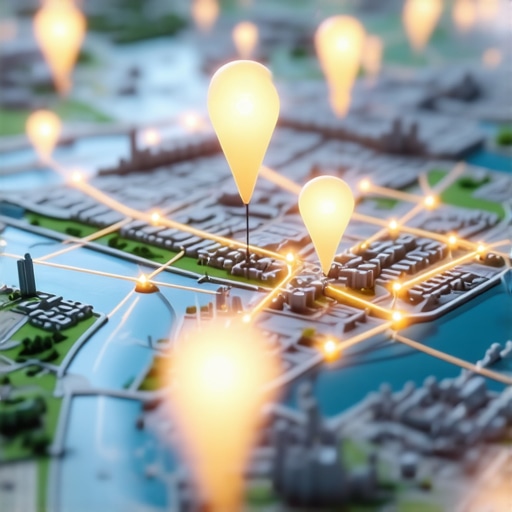
Proximity signals are mathematical weights that prioritize business listings based on the distance between the user mobile device and the verified physical address. If your profile is under attack, your effective ranking radius will shrink. Google will only show you to people standing right on top of your shop. This is why you must understand the neighborhood radius myth that limits your service area reach. You aren’t just fighting for stars; you are fighting for the right to be seen five miles away. When trust is lost, your visibility is the first thing to go.
We recently saw a case where a law firm lost its ranking because it was using a virtual office. This is a common mistake. You need seo services to fix gmb issues caused by virtual office or coworking space before an attack even happens. If your foundation is weak, a single fake review can topple the whole structure. Google wants to see a real door, a real sign, and a real utility bill. They want proof that you are part of the fabric of the community. I hate it when national chains try to squeeze out the little guy by renting a suite number in a building they have never visited. It clutters the map and makes it harder for everyone.
Local Authority Reading List
- Dominating the Map Pack
- Local Schema Masterclass
- Backlinks That Move the Needle
- 2026 GBP Checklist
- Surviving Competitor Spam
Why your physical address is a liability
Physical address verification requires uniqueness in the USPS database and a lack of duplicate entities at the same GPS pin. If you share a building with ten other businesses, your trust score is already at risk. If you then get hit with fake reviews, the algorithm might decide you are part of a lead-gen farm. This is why how to resolve address conflicts that trigger googles duplicate filters is a core part of any recovery strategy. You must prove your singular existence. I have seen businesses get google maps seo services for suspended profiles only to find out their address was the problem all along.
The math of the map is cruel. It does not care about your hard work. It cares about the forensic trace of your business across the web. If your name, address, and phone number are inconsistent, you are a ghost. You must spend time fixing name address and phone errors that ghost your map listing. Every inconsistency is a crack that a fake review can exploit. Google uses third-party data to verify your profile. If your Yelp page says one thing and your website says another, the fake reviews will carry more weight because your own data is unreliable.
The ghost in the GPS coordinates
GPS coordinate salience measures the alignment between a business pin and the behavioral patterns of mobile users who visit the location. If people are not actually going to your shop, your ranking will drop. This is why 5 behavioral signals that push your pin above competitors with more citations are so important. You need real people with real phones to interact with your business. Fake reviews are often the result of a competitor trying to distract you while they build their own behavioral signals. It is a shell game. They create noise while they steal your traffic.
I remember a case where a roofing company saw their rankings vanish after a huge storm. They thought it was the competition. It turned out they were suffering from the reason roofer map rankings drop after your best sales week. They had too many leads and not enough physical interaction at their office. Google thought they had moved. You must constantly feed the system with proof of location. Use the software tools that actually track your position in the 3-pack to monitor your movement. If you see a sudden shift that correlates with negative reviews, you are under attack. Don’t wait until the phone stops ringing to act.
The JSON-LD strategy for rebuilding trust
Structured data implementation provides machine-readable proof of business legitimacy to search engine bots and AI Answer Engines. You cannot just hope Google understands your site. You have to tell it exactly who you are. Use fixing the structured data errors that confuse local search bots as your primary defensive measure. When your schema is perfect, it acts as a secondary verification of your profile data. It makes the fake reviews look like the outliers they are.
We also look at the exact way to use local schema markup without triggering a spam filter. If you over-optimize, you look like a spammer. If you under-optimize, you look like an amateur. The balance is in the details. Include your social profiles. Include your specific service area polygons. This tells the algorithm exactly where you operate and who you serve. It builds a fence around your proximity beacon that is much harder for a fake review attack to penetrate.
Tactical leads and the Map Pack ecosystem
Local lead generation depends on the interaction proof between a customer search query and the actionable buttons on a Google Business Profile. If your profile is messy, people will not click. They will see the 1-star reviews and keep scrolling. You need a toolkit to increase local leads from google maps that includes proactive review management. Don’t just wait for attacks. Build a wall of positive, verified, GPS-tagged reviews from your actual customers. This is the only real defense.
If you have moved recently, you might be facing seo services to fix gmb ranking loss after address change. This is a prime time for competitors to strike. They know you are vulnerable. They know Google is re-evaluating your position. I have seen entire businesses collapse because they didn’t handle a move correctly and then got hit with a spam attack. You need a checklist. You need a plan. And you need to stay vigilant. The map is a living, breathing thing. It requires constant attention and a deep respect for the data that drives it. Don’t let the chains and the spammers win. Protect your pin. Protect your reputation.