The Radius Mistake That Keeps Your Service Area Pages Off the Map
The Radius Mistake That Keeps Your Service Area Pages Off the Map
For the modern Service Area Business (SAB), the struggle for visibility is a daily battle against an invisible boundary. You provide world-class plumbing, roofing, or HVAC services. You have a fleet of branded trucks and a team of certified experts. Yet, the moment you leave the five-mile bubble surrounding your home office or warehouse, your business effectively vanishes from the Google Map Pack. You are a ghost in the very cities you serve.
This phenomenon isn’t a glitch; it is the result of a fundamental misunderstanding of google business profile seo. Most business owners and even many “experts” fall victim to what we call the “Radius Mistake.” They believe that by drawing a wide circle on their dashboard, they are telling Google where they work. In reality, they are often telling Google to ignore them everywhere that matters.
In this guide, we will dissect why the traditional approach to service area settings is failing in 2026 and how you can leverage hyperlocal seo and technical optimization to reclaim your territory. If you want to rank higher on google maps, you must stop thinking in circles and start thinking in data points.
Section 1: The “Invisible” Service Area
The frustration is universal among SABs: you are physically located in a suburb, but 80% of your high-ticket leads are in the metropolitan center twenty miles away. You set your service area to a 30-mile radius, expecting the leads to pour in, but the Map Pack remains dominated by competitors who might not even have your level of expertise. Why?
The core issue lies in how Google interprets proximity for businesses without a physical storefront. According to data from Shoreline Digital, SAB listings frequently suffer from “Lower Visibility” compared to brick-and-mortar locations because their proximity signals are inherently weaker. While a storefront has a fixed, verifiable point of interaction, an SAB’s location is often “hidden,” leaving Google’s algorithm to rely on secondary signals to determine relevance.
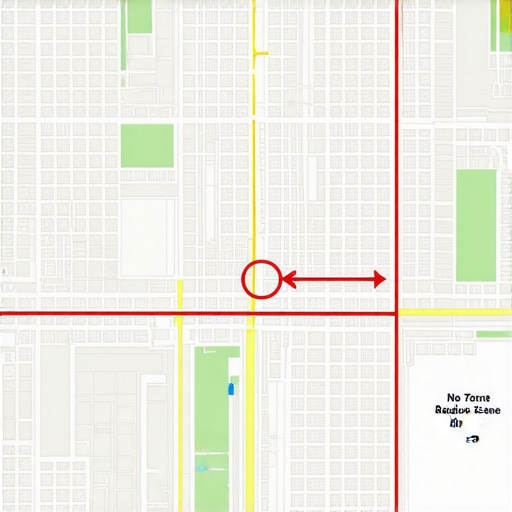
The “Radius Mistake” occurs when a business selects the “distance from business” option in the Google Business Profile (GBP) dashboard. By setting a broad mile-radius, you are providing a “lazy” signal. You are essentially telling Google, “I might go here.” In an era where google business profile optimization requires precision, “might” isn’t good enough to beat a competitor who is telling Google exactly where they are relevant through zip codes and hyperlocal content.
Section 2: Why the “Radius Setting” is a Ranking Killer
Google’s local search algorithm is built on three pillars: Proximity, Relevance, and Prominence. For a Service Area Business, the proximity pillar is the most volatile. When you use a radius setting, you are creating a generic buffer. Google’s algorithm prefers defined boundaries – cities, counties, and postal codes – because these align with how users search and how geographic data is structured.
A 20-mile radius is a mathematical abstraction. A list of 15 specific zip codes is a set of hard data. When you define specific areas, you are providing a clearer signal that helps Google map your services to specific user queries. As Kevin Pauls (Local SEO Consultant & GBP Product Expert) notes, “To dominate the Map Pack, businesses must move away from vague geographic claims. Google needs to see a clear map of where you provide value. If you don’t clarify your service areas with precision, you are essentially asking Google to guess your relevance, and Google hates guessing.”
This lack of clarity is often why your service area business disappears the moment you cross city lines. The algorithm defaults to the “centroid” of your verified address. If you haven’t reinforced your relevance in neighboring cities through technical SEO, the “proximity pull” of your home office will always be too strong to overcome in distant markets.
Furthermore, the radius setting often conflicts with geo targeted seo efforts on your website. If your GBP says “20 miles” but your website target is “City A,” the discrepancy can trigger a “relevance mismatch,” causing Google to demote your listing in favor of a business that shows consistent geographic signals across all platforms.
Section 3: The 2026 Google Playbook for SABs
The landscape of google business profile seo has shifted dramatically. We are no longer in the era of “set it and forget it.” According to the [Services] GBP Best Practices Playbook 2026, Google has integrated more sophisticated verification methods for service areas. It is no longer enough to claim you serve an area; you must prove it through “Real-World Interaction Signals.”
One of the most significant changes in 2026 is the weight given to the “Services” menu within the GBP. Detailed descriptions, specific service categories, and transparent pricing are now essential visibility factors. If you are looking for a google maps ranking service, the first thing they should audit is whether your service list matches the specific needs of the neighborhoods you’ve selected.
Google is also increasingly using Point of Sale (POS) data and mobile wallet pings to verify where a business actually operates. If your technicians are frequently processing payments in a specific zip code, that data flows back into Google’s ecosystem, reinforcing your proximity signal for that area. This is a far cry from the old days of simply checking a box in the dashboard. You need to ensure your digital footprint matches your physical service footprint. To stay ahead, you must consult the 2026 Google Business Profile Checklist to ensure you aren’t missing these new technical requirements.
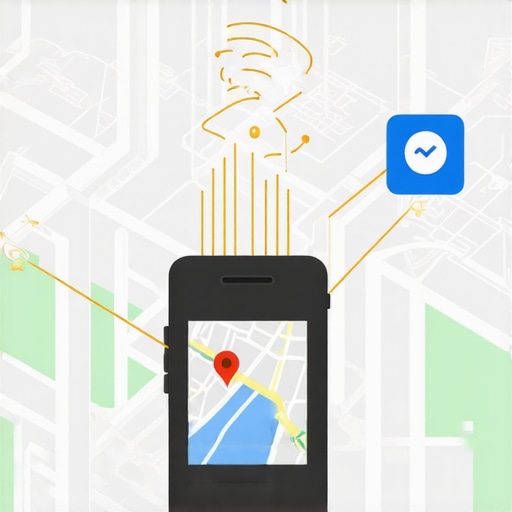
In 2026, “Wi-Fi Density” and “Mobile Payment Verification” have become the strongest signals for local map pack seo. Google’s ability to track the location of a business’s mobile devices (with permission) allows them to see where the “work” is actually happening. If your GBP claims you serve a city 40 miles away, but no device associated with your business has been there in six months, your rankings will crater.
Section 4: Building Hyperlocal Authority
Your Google Business Profile is the front door, but your website’s Service Area Pages (SAPs) are the foundation. To rank in multiple cities, you must stop making your city pages look like low-quality templates. Google’s “Helpful Content” updates have become incredibly adept at spotting “find and replace” style pages where only the city name changes.
Hyperlocal seo requires you to weave the community into your content. This means:
- Mentioning local landmarks (e.g., “We recently finished a roof repair near the historic clock tower in Downtown…”).
- Discussing neighborhood-specific challenges (e.g., “The older Victorian homes in [Neighborhood] often require specialized copper piping…”).
- Showcasing local partnerships or sponsorships.
Another critical element is the “Interaction Trigger.” When a customer leaves a review, and they mention the specific neighborhood or city where the work was done, it acts as a proximity-relay fix. It tells Google, “This business is verified as active in this specific location by a third party.” This is far more powerful than any radius setting. You should actively encourage customers to mention their location in reviews to boost your gmb ranking service effectiveness.
Strategic internal linking is also vital. You need to show Google the relationship between your main service and your specific locations. For example, understanding how to target specific neighborhoods without tripping Google’s spam filters is the difference between a ranking boost and a manual penalty. You want to build a “web” of local relevance that connects your GBP to your SAPs through structured data and localized content.
Section 5: The 15-Minute SAB Audit
If you want to fix your visibility issues today, follow this checklist to optimize your google business profile seo. You can also use a google business profile audit tool to automate much of this process and find hidden errors.
- Kill the Radius: Go into your GBP dashboard. If you have a mile-radius set, remove it. Replace it with up to 20 specific cities or zip codes. Prioritize the areas where you have the most historical data or the highest profit margins.
- Audit Your NAP Consistency: Ensure your Name, Address, and Phone number are identical across your website, GBP, and all local citations. Even a minor discrepancy (like “St.” vs “Street”) can dilute your local seo services efforts.
- Check for Hidden Schema Errors: Use a schema validator to ensure your website uses “ServiceArea” schema correctly. Many businesses accidentally use “PostalAddress” for their home office in a way that tells Google they only work at that one spot. You need “GeoShape” schema to define your service boundaries to the search engine.
- SAB vs. Hybrid Status: Are you truly an SAB, or do you have a physical location where customers can visit? If you have a storefront, you should be a “Hybrid” business. If you hide your address, you are an SAB. Choosing the wrong one can lead to “Why your service area business is invisible outside your home office” symptoms.
- Update Your Services: Go to the “Services” tab in GBP. Don’t just list “Plumbing.” List “Emergency Drain Cleaning,” “Tankless Water Heater Installation,” and “Sump Pump Repair.” Add descriptions and, if possible, starting prices. This builds the “Relevance” pillar of google business profile optimization.
By executing these steps, you move from a passive, radius-based strategy to an active, data-driven approach. You are no longer hoping Google finds you; you are making it impossible for Google to ignore you. To see how you’re currently performing, consider a google maps rank tracker to get a baseline before making these changes.
Section 6: Conclusion & Call to Action
The “Radius Mistake” is a relic of an older, simpler version of Local SEO. In 2026, the Map Pack is more competitive and more intelligent than ever. To rank in the Google 3 Pack, you must provide the algorithm with the specific, hyperlocal data it craves. Broad circles and templated city pages are no longer enough to sustain a growing service business.
The shift from broad radii to specific service areas, backed by technical schema and hyperlocal content, is the only way to maintain a dominant presence in the Map Pack. Remember, proximity alone no longer guarantees a ranking. In the modern era of google business profile seo, you need proof of local interaction and a clear, defined service map.
Stop guessing where your business appears. Start using professional local seo tools to track your actual performance and identify the gaps in your geographic coverage. The map is changing; make sure your business is the one leading the way. If you’re ready to take the next step, explore our deep dives into why your service area business is invisible outside your home office and start your journey toward local dominance today.


![4 New Local Pings to Rank in Maps Without 2025 Citations [Tested]](https://getrankedinmappack.com/wp-content/uploads/2026/04/4-New-Local-Pings-to-Rank-in-Maps-Without-2025-Citations-Tested-1.jpeg)